Showing posts with label Audley's Workshop. Show all posts

Wednesday, September 16, 2015

Audley's Workshop: Carvin' Niches for Killin' Bitches

Back to Audley's Workshop we go! In today's blog, I'm going to be talking about some various Halo weapons as well as PlanetSide 2's incarnation of the Vanu Rocket Launcher, the Lancer, and finally, my favorite FPS weapon design of all time. The general focus will be weapons with very distinct niches, whether they underperformed or overperformed in those niches.
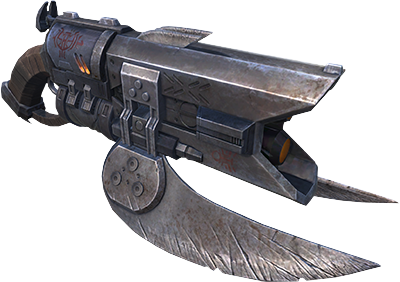


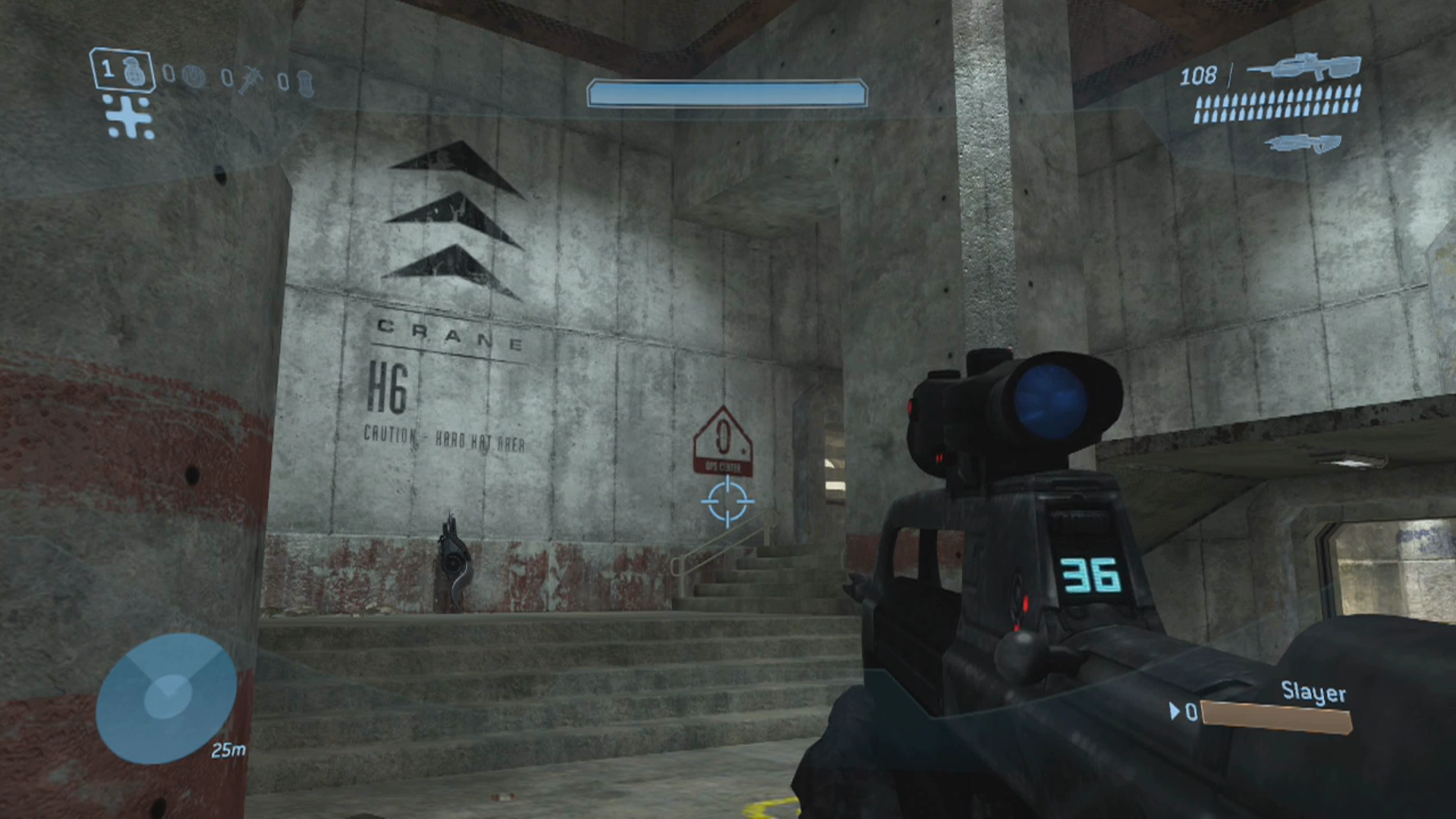
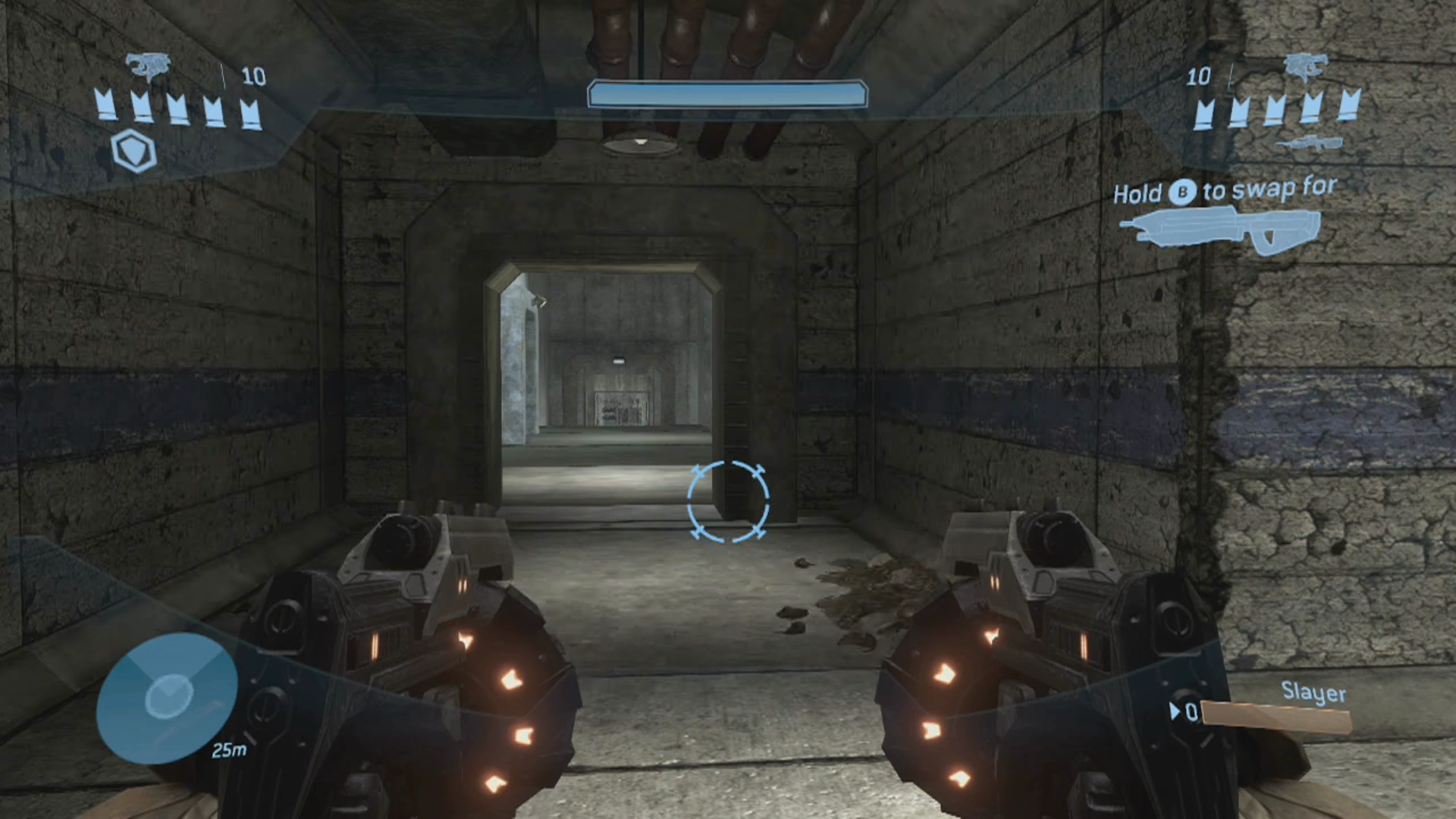
First, the gun labeled the Type-25 Carbine...but more commonly known as the Spiker. This gun looks badass. Like other Brute weapons, blades are a big part of its visual design.

I was one of the top 10 players in Spiker kills in Halo 3 according to HaloCharts back when the website was active and tracking stats through Bungie's API. So, if you're reading this and wondering, “Why does this MLG kid think he can talk about a social weapon?”...first off: I'm a BTB kid, not an MLG one. I only got into competitive 4s because there was a more established scene. I will always feel BTB is the more “pure” Halo experience and the better representation of the game's beautiful sandbox. Hell, I even took down Disco (top Social pilot) in his Banshee with Spikers once. Hitting a Banshee with short-range projectiles is not an easy task. I knew my way around the Brute equivalent to the SMG.

But wait, equivalent to an SMG? ...the Spiker is supposed to be a Carbine. Or a Spike Rifle. Why is Master Chief able to dual-wield a rifle from a species of creature more than double his size? Why is it treated like a submachine gun instead of a RIFLE OR CARBINE as the weapon name says?

Some quick notes about the Spiker:
  • Higher damage output than the SMG, and more damage to shields
  • Projectile, harder to aim
  • Spikes affected by gravity (and inertia, they move more slowly as they go)
  • Larger spread than any other weapon in UNSC/Covenant sandbox
  • Deals 2 more points of damage (TWO. REALLY?!) than default melee.

So the Spiker suffers not only from an identity problem (SMG RIFLE WHAT ARE YOU DAMN IT), but also suffers from its gameplay not matching its visual.

There are two routes we can take to make the gun feel better to the player. We can embrace the Covenant/Brute SMG identity, or we can turn the gun into a true Spike Rifle. Given the Covenant already have the Plasma Rifle to rival the SMG, but don't have an equivalent to the Assault Rifle in the context of Halo 3... let's take the Spike Rifle along the latter route. No more dual wielding.

Since the Spiker is meant to be a Brute weapon, this definitely means we need it to be fearsome up close. Brute combat was very much about rushing. Besides, the weapon has GIANT FUCKING DOUBLE BLADES attached to it. Halo 2 took the right approach to the Brute Shot's melee identity during the big patch that reworked damage, allowing a momentum Brute Shot melee to kill a target in one hit. This made the Brute Shot a fearsome close range weapon (even though the weapon itself was intended to be wielded at range.)

So step 1: Greatly increase the Spiker's melee damage. None of this 2 damage shit. Make it a one hit kill. Because you should never be in range of a Brute.
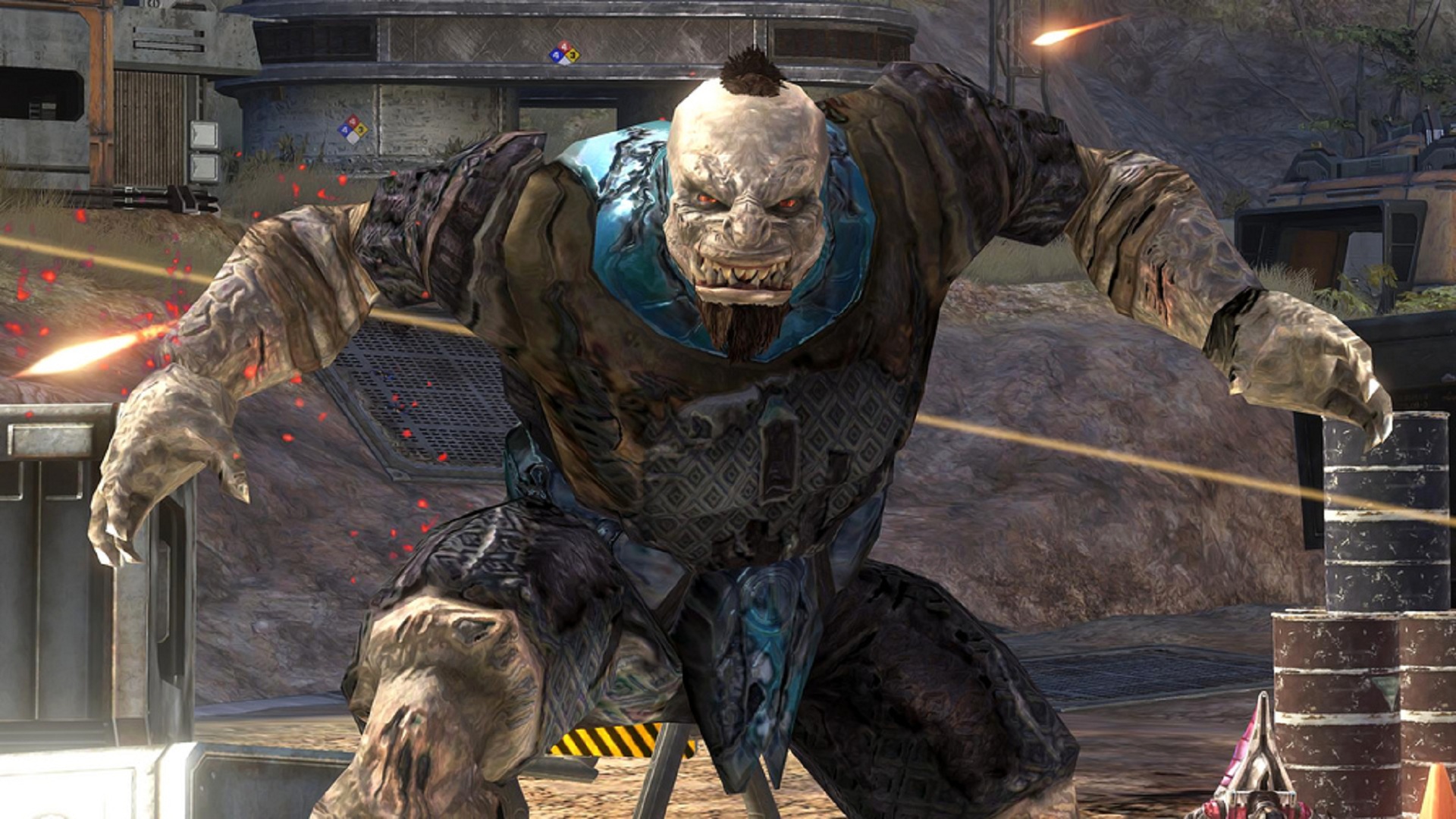


Step 2: Since we're making it live up to the Rifle moniker, rather than working as a dual-wielded SMG, we need to increase the effective range. To do this, we need to reduce the effects of gravity (projectile drop) on the spikes and reduce the enormous bullet spread of the gun. Just to make it fire a bit straighter in general, so medium range becomes a reasonable distance to try to deal some damage.

Okay, so now it's a rifle. And it's a scary rifle in melee range. But what about that old “Audley gives everything unique identity or a niche to fill” bit? Don't worry, I'm getting to that.

The Spiker fires super-heated spikes. It's not unreasonable to think they would cool off as they traveled. Plus, we've already mentioned the bullet velocity decreases as they go.

So because of this, we can take the route PlanetSide 2 takes with nearly all of its weapons – have the damage fall off at longer ranges. Up close, the Spikers spikes will deal enormous amounts of damage per bolt. Further away, the damage falls off slightly, decaying a small amount below the AR's damage output. In short, the weapon becomes stronger than the AR in closer quarters, but weaker as the range increases.

And now we've made the Spiker live up to its name as the Type-25 Carbine / Spike Rifle. And made it live up to its visual of the blades.

(Of course, if you wanted to turn it into a Tier 2 Power Weapon rather than just “the Brute AR”...you could go a step further and have the super heated visual of the glowing weapon also transfer to the weapons to where its damage increases at higher RoF / the damage carries longer range before the falloff occurs, but this would probably be a bit much / borderline superfluous.)

Since we're on the subject of Pseudo Assault Rifles...next on the anvil...


The Halo 4 Suppressor.

Even down to the bolts, this gun was basically a re-skinned Spiker. But we've already adjusted the Spiker. Let's not give the Suppressor the same treatment. In the context of Halo 4, we have the Assault Rifle... humanity's relatively low shield damage, high health damage automatic weapon...and the Storm Rifle, the Covenant projectile high shield, low health damage automatic weapon. It's fairly boring and doesn't create any interesting decisions or improved niche to make the Suppressor a “neutral” version of this where the damage is in the middle. I believe (might be mistaken) the Suppressor had the highest RoF and the highest bullet spread of Halo 4 Automatic weapons.

So...let's change that. Let's give the Suppressor its own unique niche among Automatics that no other Halo automatic has attempted. After all, the thing is called the Suppressor. Let's go all out on its capabilities for suppressing fire (extinguisher).


Call it plagiarism, but there's actually a weapon from another game I think would fit perfectly for the Suppressor's intended niche.
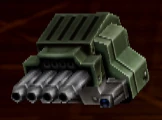


If you know this weapon, congratulations, you've played one of the most fun arena game series of all time, Armored Core. This is the “Finger” – it had various different prefixes over the franchise's different games.

But this gun was AMAZING at close ranges.

Why?

Because it was a MACHINE GUN SHOTGUN. It had an absurd rate of fire but also fired multiple bullets at once.

Now put that in Halo.

Turn the Suppressor into a gun that fires a METRIC FUCKTON of bullets, all at the same time. A barrage of bullets, blazing across the sky. It becomes a complete melter at close quarters. Give it a large enough magazine and it can become a weapon that, although inefficient for killing at range, could at least sustain enough swarm of bullets to scare off those who fear bees.

(Shotgunified Automatic weapons in Tower of Guns are also pretty fucking badass. Or automatic version of the Shrapnel Trumpet. You know, whatever.)

Speaking of shotguns in Halo 4...


The Boltshot!

Because who doesn't want to SPAWN WITH A SHOTGUN, right?

Someone at 343, in the creation of the Halo 4 sandbox, thought to themselves, “Creating a gun that can deal instant kill damage, and being able to use that gun off spawn is definitely a healthy thing for this game.”

Granted, functionally its instant kill was similar to the Plasma Pistol – gated by a charge-up that was required before the gun fired. In theory it wasn't too oppressive. Unfortunately, when you arm potentially everyone in a game with a weapon that can instant kill, the problem is that everyone in the game will take the weapon that can instant kill. When that weapon is range gated, it leads to gameplay issues.

The Boltshot was a unique pistol. And a cool design. But it was unquestionably too powerful.

So, what can you do to the Boltshot to keep its identity of “Shotgun Pistol” without turning it into the Halo 3 Mauler but also keeping it from being a one-hit kill weapon?

  • Nerf the damage. Make its charged up damage deal full shield damage, but make the body damage fairly weak, such as taking 3 charged shots to kill a foe. With this change, you can make it so the effective range of the charged shot isn't forced to be immediate vicinity.
    • This will encourage using the pistol form's headshots to finish off a foe, turning the gun into a self-sustained noob combo.
  • Increase the charge-up time slightly. Since it's not killing foes with the Charge now, it doesn't need a slow charge.
  • Decrease the amount of ammo consumed by a charge-up to 3. This will further encourage charge shots + follow-up pistol bullets.

With these changes, you turn the gun from an outright shotgun pistol into a gun that's balanced for skill. It's got the pseudo-shotgun identity of having a ton of burst damage at close range, but you still need to be able to land the pistol headshots in order to reliably finish a kill. Unlike a true Noob Combo though (the Plasma Pistol + Battle Rifle combo from Halo 2, if you're for some reason unfamiliar), this one-weapon version is limited in range. So there's still room for swapping out your weapon for a better version.

I've done a good job with my segues so far this blog... but now I'm all out of good segues. A good one for this next weapon is a bit out of Reach.


The Plasma Launcher. Also known in the BTB community as Blueberries. This gun was actually pretty useless in the vehicle killing niche. Where it should have theoretically been strong.

It could take down a Warthog, but what couldn't? The Warthog's armor was paper thin and shredded easily by a team's worth of DMRs. Which, coincidentally, had a stronger scope than the Plasma Launcher.

The true terror vehicles of BTB were tanks, the pseudo-tank Revenant, and the Banshee. Tanks could nearly shrug off the damage. The Revenant was agile enough to escape the extremely slow engagement time. And the Banshee only needed to do a single roll to break any lock-on that was attained.

So basically, you have a useless power weapon on your hands. Because again, the DMR out-ranges the Plasma Launcher, so even against foot soldiers, the weapon with the potential to one-hit kill is outclassed.

The draw of the Plasma Launcher was supposed to be it's ability to fire multiple sticky grenades at once, in addition to its lock-on functionality.

I will give credit where credit is due, the slow projectile speed means there's plenty of room for counterplay to the power weapon. Unfortunately, combining a necessity to lock on to truly be effective with a slow projectile speed means you're really hurting for effectiveness. So what can we do to make the Plasma Launcher more useful without making it overpowered?

For dealing with infantry, giving it the ability to lock onto multiple targets with a single charge could help a lot, turning the weapon into a “crowd control” weapon, rather than a “Okay I pick you.” “Now you.” one by one weapon. Allowing each of the four grenades to seek out a different target with up to four potential locks puts more power in the hands of the wielder in situations where he is outnumbered, with opportunity to take everyone down with him, if he's fast enough on the draw.

With the amount of armor abilities in Reach that catered to mobility or defense (read: basically all of them), there were plenty of ways to escape a Plasma Launcher bolt if it was coming your way. Because of this, speeding up either the grenades' travel time or the target acquisition speed is important for empowering the weapon. Players who complain about power weapons being powerful when given so many tools for counterplay BEYOND JUST DODGING, WHICH IS ALSO POSSIBLE will learn the power of the blueberries.

But how do we make it better against the Banshee?

If you improve the travel time, keeping the lock-on time the same, you can edit the Banshee to only be able to shed ATTEMPTED locks, rather than already-secured ones. The Banshee when piloted by ace pilots probably won't spend enough time without flipping to get a lock on in the first place, so this would generally solve that problem.

As for making the weapon more effective against tanks, that's simply a matter of the player wielding it getting in a position where they won't be killed attempting to get a lock on.

That's all for Halo on this blog, but it's time to talk about another “rocket launcher” that featured a charge-up time. The PlanetSide 2 Vanu Sovereignty Lancer.


In the original PlanetSide, the Vanu Lancer was essentially a 6-shot rifle that dealt significant damage to vehicles/armor. PlanetSide 2 mostly tried to keep that in tact, but turned the Lancer into a bitchified version of the Halo Spartan Laser, with three levels of charge up damage.

As with many of the weapons in PlanetSide 2's arsenal, the weapon had to be balanced for “What happens if a fuckton of people use it?”

As a result, the weapon felt almost useless for a single person to use. It didn't fill a niche of a “rocket launcher” at all for an individual. If you were by yourself, it was almost always more efficient to carry a dumbfire or a lock-on rocket launcher as a Vanu soldier, because it meant you could either kill infantry that approached or scare off vehicles with the threat of a lock on.

So how do you balance an anti-vehicle weapon for scale? How do you make a weapon that is potentially oppressive for squads of people to use feel satisfying for an individual to use? This is an important design question for every piece of the PlanetSide sandbox, as well as being important to ask in games like Battlefield or Halo in the case of BTB and upcoming Warzone. (Hell, in League of Legends we saw three instances where a summoner spell taken by an entire team ended up problematic because of how stacking them worked. Heal, Promote, and Fortify all had design problems regarding scalability.)

So now, what do you do to make a weapon such as an anti-vehicle laser interesting/useful for an
individual, but not overpowered for a squad?

The Lancer's identity was supposed to be a sort of “Anti-Vehicle Sniper” – it even required some degree of leading your shot despite being a laser beam.

Unfortunately an easy answer like “give vehicles weak points to aim for” was not an explorable option for PlanetSide 2 since that would mean additional sprites were necessary which would have destroyed game performance.

I do believe the Lancer was the longest range “Rocket Launcher” in the game. So wielding it, even as an individual, meant one could at least harass vehicles from far out of their engagement range. However, because of Engineers' potential to repair a vehicle more quickly than a Lancer could damage it, it wasn't really possible to do relevant chip damage to a vehicle.

Instead of buffing impact damage, giving the Lancer a damage-over-time effect which does not stack (but similar in power to the amount a single Engineer could repair, with a duration roughly equal to a charge time for another Lancer shot) would allow a single Lancer to feel impactful against a target – ensuring that each shot would be impactful, while the damager-over-time would offset the potential for the vehicle's driver to simply hop out and repair until the Lancer-wielder ran out of ammo. Additionally, since the damage-over-time effect does not stack (simply reapplies), having multiple Lancers firing would not make the weapons any more fearsome than usual in a group.

It would empower an individual, but keep the groups in check.

And so the PlanetSide 2 Lancer is more satisfying for an individual and still relevant in its niche as the Anti-Vehicle Sniper.

So finally, we come to my favorite weapon from any shooter ever.

It comes from Unreal Tournament (big surprise)


This is the Shock Rifle. A glorious projectile weapon with a hit-scan alternate fire method.

I'm not here to redesign the weapon or suggest any methods on how to improve it. I'm just here to share the gospel of a fantastic weapon.

The gun could fire either straight laser beams or “shock cores” which traveled significantly slower than the laser beams. The shock cores could then be hit by the laser beams and detonated from a range, dealing a massive amount of AoE damage that usually killed a target it one hit.

It's a brilliant skillful design with tons of nuance and mastery. Good counterplay due to the slower projectile speed of the instant kill. Tons of clarity of what's going on. Every gun should strive to be as awesome and satisfying as the Unreal Tournament Shock Rifle.

And if the Shock Rifle weren't cool enough, they took that gun concept and put it into a vehicle as well, known as the Hellraiser, which could rapid fire Shock Cores, and then detonate them in a chain of explosions. Just in case you needed to feel truly epic.


With that, this blog is donezo. Hope you enjoyed the read!

Saturday, September 12, 2015

Audley's Workshop: Lockout Reforged

Lockout is one of the most polarizing maps in terms of fan perception. Some love it, some hate it. Very few neutral opinions exist about the map. Still, it is one of the most played maps in Halo history.

However, just because something is the most played does not make it the best. And in Lockout's case, the map had plenty of design issues that contributed to the hatred it received from those who did not enjoy.


Starting off by speaking of the pure default vanilla slayer settings (SMG starts and everything) on the map, Lockout was problematic.

Games were often extremely snowbally because the strongest point of the map also featured the spawn of one of the two Battle Rifles on the map. Once you had top control, you had little incentive to move. Because you had rifles.

To make matters worse, even if the players down low were equipped with rifles, their sightlines were rather limited in terms of what they potentially could see up top. The only time they had the option to engage a player from below is when the top player chose to expose themselves – there were no sneaky sightlines a player down low could use to combat someone positioned well up top.

Some of this was offset by the multiple jump shortcuts to hasten your ascent of the map, but most of these were in areas that already had strong map flow. Areas such as Shotgun or Sword spawn had extremely limited options in terms of routes you could take to leave. And by extremely limited, I mean one and two respectively. This could lead to situations of helplessness or feeling like the player has no decisions to make when traveling these portions of the map.

Because of the weapon layout and map geometry, there was also no way to balance starting spawns for players. While certain initial spawn layouts could mitigate some of the advantages and create potential tradeoffs for teams, the weightings were never quite even.

Even in the case of BR starts, the map was segmented enough that Slayer could devolve into stalemates with players afraid to even attempt peeking versus an enemy Sniper. The lack of decent flank routes on the map lended no assistance to the issue. Movement incentives were limited pretty harshly (and made worse by Halo 2's weapon spawning system ensuring a weapon did not respawn until it was dropped.)

Overall, Lockout had a number of problems.

  • Impossible to balance initial spawns versus weapon layout + map geometry
  • Weapon Layout gave too much power in the hands of the team in the lead
  • Poor sightlines from the bottom of the map to fight back up high.
  • Poor map flow / lack of decision points for lower areas of the map
  • Standoffish TS gameplay with poor movement incentives.

But before we talk about solving issues, let's also talk about what Lockout did well.

Lockout was a great ball map, with three primary set-ups: Library, Sniper, and the “blue room” strategy. This is owed partially toward how few routes there were on the map, partially to the ability to “reset” the map by throwing the ball off, and partially due to the choke points to approach any of the buildings. A team in control could keep control with a numbers disadvantage (3v4) due to the choke points keeping things straightforward.

None of the power weapons were truly in the best place to use them. So, while I say there weren't very many movement incentives, you were at least encouraged to move with power weapons. Sniper was strong at Sniper tower, but attempting to use it from S3 meant you were heavily exposed from BR tower (and at risk of being barreled).


Sniper tower was able to be controlled by a single player with either of the CQB power weapons (Sword or Shotgun). If that player also had Sniper, he could one man army the entire tower by himself. This created several high points for the player, without being overly uncounterable by opponents, so long as they had Rifles.

In short: the map was good because you were encouraged to move from power weapons, but it struggled because you were not encouraged to move from (or to occupied) power positions.

Finally, before I talk about my solutions for the map, let's talk about what H2A did with Lockdown to make the map a little more tolerable.

  • Elbow was made a bit bigger, with cover, to improve the ability for bottom blue spawners to push Snipe tower.
  • Elbow was given a Carbine to ensure even in SMG start cases low spawners had access to at least one rifle.
  • Icicles were placed above BR tower, top middle, and Snipe tower to allow low spawners to at least put pressure on sightlines they couldn't see by dealing tons of area damage.

The Elbow changes are great and a step in the right direction for the health of the map, while the Icicles are gimmicky and still leave two minute windows where low spawners are virtually helpless.

So let's talk about what we can actually do to improve Lockout.

First, let's fix the Snowballing Rifle problem. I mentioned H2A Lockdown placing a Carbine on Elbow. While this is the right idea, let's make it a Battle Rifle instead. Specifically, remove the Battle Rifle from the top of BR tower. Now let's equip bottom BR spawners. Put a Battle Rifle inside BR1 or somewhere along the Sword room. Maybe even have a Carbine replace the Plasma Rifle at the suicide spot in Snipe tower. Regardless, take rifles out of positions where players WANT to use them, and instead put them in areas where they need to pick them up to fight back against players with power position control. This will encourage (in the case of SMG starts) players who have already picked up Rifles and moved into power positions to leave power positions to refill their ammo reserves, encouraging movement on the map.

With regards to the poor sightlines from the bottom of the map to fight back when players are up high, there is one sightline that's actually pretty close to being good. From Bottom Sword, you can see the ramp along the side of Snipe tower, commonly referred to as “Shortcut” due to the jump from top middle.

A few factors limit the potential of this sightline.
  • The ramp is the same width as the rest of the balcony and the back of Snipe tower, ensuring the bottom of the ramp blocks any and all potential to shoot someone standing up there unless they intentionally jump onto the rail. If the ramp were made thinner, it would slightly expose players standing around S2.
  • The Library building overhead is too thick-walled, ensuring that the players down low cannot get a proper grenade angle to grenade the top of Sniper tower without stopping movement for a substantial period of time. Widening the “roof” of Snipe tower and shrinking the thickness of Library walls could empower good grenade-chuckers to enable a push. (Additionally, having the outer mountain wall hug the Sniper tower more tightly could improve grenade angles from down low.)
  • This area cannot see the main portion of S2, no matter how the player maneuvers. Widening the dance floor around Sword could increase the vision players at Sword are able to get, allowing some low position support fire and team shooting.

Another area where sightlines could be improved is from bottom blue's door / bridge to under glass. Some problems:
  • The enormous top middle corner toward Elbow blocks any possible sightlines of top Snipe, though it does enable sightlines to S2. This prevents a team who wants to push Snipe and double spawned Blue from having one player take pressure off an S3 Sniper from Bottom Blue while the other pushes Elbow. This portion of top middle never sees relevant gameplay and could be thinned out to improve sightlines and the ability for bottom blue players to grenade S2.
  • The railings on the bridge are not actually tall enough to use for cover unless a player is on the “wrong” side of them. Opening up the flat portion as an entrance to the danger rails could improve flow to these “wrong” sides and enable players to use the rails to BREAK sightlines as they push for a flank opposite of where the opponents are positioned, using the shortcut jumps toward S1 or BR1.
  • There is no way to break the sightline from Library Window as you push out of Bottom Blue, meaning if a player is positioned back BR and another in Window, you're likely going to die before you can make it halfway up the bridge. In this instance, this may be a “deal with it” sort of situation, though increasing the railing height at open ramp near BR2 could cut off enough of the back BR sightline to allow this to become a 1v1 situation.

The final area of Lockout needing sightline improvements is at Elbow, but H2A Lockdown handled this quite nicely by offering cover and more dance floor. If the above change to elbow top mid corner was made, shrinking that area, it's possible that combined with the H2A changes, this portion of the map could have a sightline to Library front door or Window, combined with jump shotting. This could encourage Sniper movement or simply encourage BR players to move to this otherwise suboptimal area to trade shots in stalemates.

But we still have an issue of map flow at Shotgun and Sword spawns specifically. As a general rule of thumb, players should have 3 directions from which they can leave a position once there. For both of these positions, this is not the case.

Surprisingly, the issue can be alleviated in a manner that barely requires any additional geometry on the map. By extending the Sword bridge area out toward bottom middle and creating an entrance slightly above the back of Shotgun which can drop down into Shotgun (but also allow a person at Shotgun to jump out the back and move to Sword, you've increased Sword exit options to 3 (Shotgun, Under Glass, or BR1) and Shotgun exits to 2 (Bottom Blue, Sword). You've also increased the counterplay options to the infamous Blue room strategy, as now Shotgun has two entrances, one of which is substantially safer to approach than the other. This method has yet another advantage, in that it will allow players moving from Sword to be able to see S2 as they push, giving another Low->High sightline option that was not previously available.

While this doesn't quite get Shotgun to satisfy the Rule of 3, we can mark that off as a valid tradeoff for one of the map's strongest weapons being placed in its weakest position.

This new route can also enable new flank opportunities for players not keeping a close watch on bottom middle, increasing movement incentives or potential for Slayer gameplay.

These changes to bottom middle, Sword, and Bottom Blue alleviate many of the issues that plague Lockout TS, but still don't fix the issue of the impossible to balance initial spawns versus the weapon layout and map geometry.

H2A Lockdown gave us the Library versus S2 initial spawns, but in this case, Library has the advantage opening, due to the ability to deny Sniper, get Sword, and equally contest Shotgun, while also having access to the strongest position on the map and the most important early spawns for KotH.

Moving the Library team to BR2 would give them even better chances of getting the Sniper off the start at the cost of delaying Sword (and preventing the fast Sword boost back to Library)

Moving them to BR1 would deny any chance for them to contest the initial Sniper. Moving them to Blue would deny them access to any power weapon other than Shotgun.

The best available solution in Lockout's case (and in any Asymmetrical map where balanced initial spawns are not an option) is to delay the initial power weapon spawns – leave only the neutral one (Shotgun) up for grabs at the start, and place teams away from power positions (Spawn them at Sword / Elbow or something of the sort.) This lets them vie for whichever positions they value most and prepare for a delayed spawn of power weapons once the match has gotten underway and initial battles where neither team had a distinct weapon advantage have resolved.

With these changes, Lockout would be in a much healthier state for gametypes that aren't Oddball, enabling the map to feel less like having teeth pulled when selected for Slayer or other options.


And with that, this visit to Audley's Workshop is finished.

Tuesday, September 8, 2015

Audley's Workshop: Another Visit to the Halo Sandbox

Time for another visit to Audley's Workshop! Back on the subject of the Halo sandbox this time rather than maps. And this time, I'm going to be talking about something very near and dear to my and the majority of Halo players' everywhere's hearts. A piece of the Halo sandbox that was welcomed with open arms and loved by everyone who ever used it.

And in case you haven't caught onto the sarcasm just yet...

I'm talking about Armor Abilities (and some Halo 3 equipment).

Now, you probably already want to stop reading because I mentioned those two awful words that made many a Halo player stop playing. But I encourage you to stay, even after I make this shocking next statement: I liked the idea of armor abilities. I just despised the implementation, both from the perspective of a player and from the perspective of a designer.

Today, I'm specifically going to be speaking about the abilities that were designed to increase your survivability. And although I stress mobility is survivability, I'm not going to be speaking on mobility today – we'll save that for another time. For this subject, we're talking:

  • Reach Armor Lock
  • H4 Hardlight Shield
  • H3 Bubble Shield
  • H3 Regenerator
  • Reach Drop Shield

Before I delve into any individual bit, I want to point out why these are generally all bad for Halo's gameplay. The general consensus among players that complained about them revolved around two arguments. The first, “It lets an idiot get away with making dumb plays and survive.” The second, “It slows down gameplay.”

To anyone arguing the former: No, shut up, you're wrong. It increases the amount of play options available to a player by giving them more opportunities to survive an encounter or wait for help. Them taking a survivability ability alone does not guarantee the “dumb play” will work. It enables them to make larger perceived risks with the knowledge they have more safety than is immediately apparent. This is actually a positive in my eyes.

But then you take the latter. Slowing down gameplay. Making it more time consuming to punish players for overextension is frustrating in the best case scenario. In the worst case, it gives the aggressive idiot time to be saved by his teammate. (Audley, weren't you just saying they can take more perceived risks? Wouldn't this be one of those?)

Let's talk Armor Lock.


Armor Lock was by far my favorite (and probably my most used) Armor Ability in Halo Reach. I adored its two primary functions: Parrying explosives and EMPing vehicles.

Unfortunately, Armor Lock was overtuned. Although it was meant as a method to survive fatal damage and to disable vehicles, it ended up being far stronger. Vehicles had to be terrified of attempting to splatter players running across an open field, as Armor Lock wouldn't just EMP their vehicle. It would outright destroy it. The attempted splatter would deal more damage to the vehicle than running full speed into a brick wall or colliding with another vehicle.

Rather than being used to survive fatal damage, players would hold Armor Lock for its insanely long duration and wait for teammates to come clean up. In some cases, such as Slayer variants on Countdown in default settings, full teams of Armor Lock played their own version of leap frog alternating armor locks to take down opponents. It was a grave oversight that led to extremely poor emergent gameplay.

The nerfs given to the ability when 343 took over were too conservative. Armor Lock had two distinct niches in which it could exist, as outlined above.

Gutting the duration of Armor Lock to only let it last a fraction of a second (you know, to make it specifically avoid bursts of damage) would've gone a long way toward making the ability require skill to use rather than “Let me go make a dumb play and bait people while I'm invincible.”

Further, removing the self-inflicted vehicular suicide functionality (and replacing it with further stressing of the Armor Lock's original intent of EMPing the vehicle) would also have made the ability less daunting in the context of Big Team Battle or open maps.

Even with these two extreme nerfs (duration and reflected damage), Armor Lock still is the dominant choice in its niche (surviving fatal explosions and avoiding being splattered by vehicles) – but “edge case” (read: THE WAY IT ACTUALLY GOT USED ALL THE FUCKING TIME) uses of overextending and sitting in your impenetrable glowy fortress of autofellatio for 5 seconds while praying your teammates saved you would be completely eradicated.

It also wouldn't effect the little known aspect of the Armor Lock EMP that I abused – where the shields of a player would be drained when used at melee range, allowing you to instantly kill a player with a melee if they stood over your armor locking body. This added a nuance to CQB encounters, and if the Armor Lock duration were more along the lines of a quarter of a second rather than several seconds, it could lead to players attempting to block an enemy melee and immediately countering with EMP+Melee of their own if CQB devolved into a fist fight.

Armor Lock is fixed. But let's stay on the same track for our next subject.


The good ol' Hardlight Shield.

This was another instance of an armor ability that had really cool moments, but ultimately degraded into a “Oh, fuck, I'm going to die so let me just hold onto this button as long as I possibly can and pray for deus ex machina or for them to run out of ammo!” ability.

Hardlight Shield was really cool when you deflected a rocket right back at the rocketeer and killed him with it. It was a rare occurrence since the deflection angles were really awkward and hard to figure out (too much curve to the shield, made it really hard to actually aim.)

Like Armor Lock, HLS was a really cool parry option introduced to Halo. And also like Armor Lock, rather than embracing the Parry identity, it was given a lengthy duration which turned its identity into a hulking Riot Shield-esque ability which slowed your movements while blocking any incoming damage from that direction.

343 definitely learned lessons from Armor Lock in Hardlight Shield's design: shields didn't recharge during use, and the immunity to damage was only directional. They seem to have also decided Armor Lock's immunity to being splattered was too strong and allowed HLS users to become pavement paint.

Hardlight Shield was essentially a nerfed Armor Lock – you are still exposed to damage from most directions (and even some areas on the front, like your feet) and still susceptible to grenades, so long as they're thrown a little extra distance. Because of these additional vulnerabilities, I managed to convince Gh057Ayame to include Hardlight Shield for testing as one of the potential Armor Abilities to call down with Personal Ordnance in Team Throwdown settings.

However, despite being a “nerfed version of Armor Lock” its dragging duration allowed players to use it while trying to hobble back into cover during a losing fight, or to simply wait for a teammate to be able to help. I recall seeing Pistola use the ability in one AGL tournament to great effect, as the Wizard of staying alive would certainly do. He abused its power well and made sure to annoy enemy players by appearing to be overextended, but knowing he could get back to cover if he truly wanted to.

I think one of the biggest mistakes in the Hardlight Shield's design was the continued focus on reduced mobility in exchange for its damage mitigation. So Audley, what would you have changed about Hardlight Shield if you had been its designer?
  • Reduce the duration. Maybe not a quarter second like Armor Lock (since this is much more vulnerable) – something closer to 1-1.5s. A full 1v1 kill time worth of timing, but no more.
  • Leave the player's mobility completely in tact. That's right, even allow them to sprint with the Hardlight Shield up. This encourages a player in a hallway battle to activate their shield and rush at the unsuspecting foe. It encourages making aggressive plays with the ability.
  • Normalize the deflection of the shield / Flatten the shield. Make it so things hitting you head on are deflected directly back (in most cases, it seemed things went off to the right.). The ability to deflect rockets back at the rocketeer (or Scorpion tank shells) was one of the most interesting interactions of the ability. HIGHLIGHT THIS INTERACTION.

With these three changes, the Hardlight Shield encourages more aggressive usage, while also giving it a more highlighted niche as a strong ability to use in choke points. With the improved deflection and the maintained mobility, it also increases the potency of selfish use of the ability, rather than having to rely on teammates to help you, or encouraging use defensively to stall for time.

Hardlight Shield and Armor Lock are now more fun to play with and against. Let's move on.

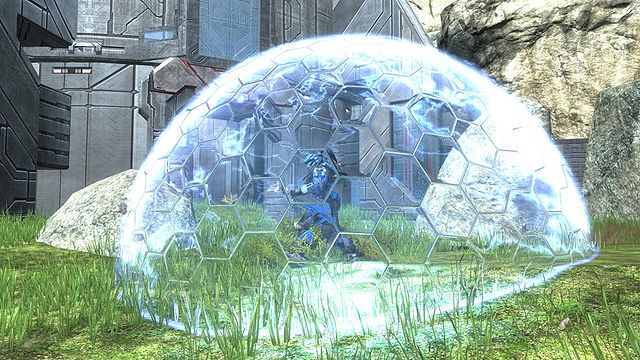
Halo 3 gave us the Bubble Shield and the Regenerator, and Reach bastardized them with its Drop Shield. All three were extremely important in the context of BTB, but were absolutely banned from competitive 4v4 settings. Drop Shield made Oddball games extremely one-dimensional.


Halo 3's Bubble Shield saw four primary use cases.
  1. Place on an Armed Bomb to buy time to disarm.
  2. Place at a doorway in order to give space to escape and/or safety to board a vehicle
  3. Place in an open area with large space between points of cover to stop and recharge your shields before pushing up further.
  4. Place to bait players with larger effective range to come fight you inside the bubble (whether this meant you had a shotgun and were trying to get an easy CQB kill, or if you were hiding from a vehicle to try to bait them into splattering you but turning the tides with a Plasma Grenade or highjack.)

In most cases, these were pretty healthy for the game. But on smaller maps, numbers three and four become problematic. In a long ranged battle and afraid you'll lose? BUBBLE! Have a Shotgun and can't get close? BUBBLE! Down a shot? BUBBLE!

Although the Bubble Shield had many avenues for proactive use, it's also a strong stall tactic, with very limited options for counterplay unless you were already in close quarters. The Bubble could be destroyed from the inside (or knocked away with a grav lift or some of the ball equipment like Power Drains or Radar Jammers).

If you were outside the Bubble, you were shit out of luck. You had no way to burst the Bubble. No way to damage the Bubble. Nothing to do but wait. There's nothing fun about that.

If you were inside the Bubble, and no one came in, you were shit out of luck. You were stared at by watchful eyes. No way to damage them from inside your zone of safety. Nothing to do but wait for your eventual demise. There's nothing fun about that either.

Bubble Shields in these cases were the definition of anti-fun. Neither side gains any fun from using the Bubble Shield in this manner. For the side whose kill was denied by the cowardly option, their fun was taken away.

On the other hand, Regenerators in Halo 3 ended up being used quite a bit differently. The most common use case for a Regenerator was simply to tank long range shots while you won the gun battle. Because a Sniper or a grenade+well-timed shot could kill you within the Regen, the “bait safely with Shotgun” use cases were not available.


In the case of CQB combat, use of the equipment was not favored toward “whoever had the better CQB weapon” (as was the case for a Bubble Shield) but rather, “Who used the Regenerator?” – the person outside the regenerator continues taking damage until they get into range of the field (at which point they may also reap its benefits.) Whereas with the Bubble Shield, neither player may exchange damage until both are on the same side of the Bubble, much like dreaded shield doors.

Comparing the two directly,
  • The Bubble Shield was stronger at countering power weapons (as it made the person inside immune to external damage.)
  • The Bubble Shield had less options for counterplay, limiting such options only to players able to infiltrate the shield. The Regenerator player could be killed through teamwork, power weapons, or very good grenade+weapon usage.
  • In the context of impending CQB, the Regenerator gave more power to the player who used it as opposed to the player with a CQB weapon. A rushing player with a BR and a Shotgun was susceptible to a player inside Regenerator with a BR, but would likely win against someone who threw a Bubble Shield.

Overall, however, the two generally fulfill similar niches. I mentioned in my Rat's Nest post the Regenerator was better for aggressive plays while the Bubble Shield was better saved for protecting spawners or disarming a Bomb – this is still true (after all, can't mass-slay the people disarming the bomb with your rockets if they throw a Bubble Shield on the Bomb plant.)

Removing the Bubble Shield option all together, however, would be a superior option, as it prevents the earning of a power weapon from being countered by a much more commonly spawning piece of equipment, and increases the amount of effort a defending team must execute to disarm the bomb.

If the “I want to avoid this one Rocket” function a Bubble Shield brings is deemed necessary, the Regenerator could deploy an outward force field when first activated that immediately dissipates. You know... like a parry. (I seem to like those, yeah?)

For all other intents and purposes, such as temporary cover or time to regain shields...the Bubble Shield's functionality could've been covered by a piece of equipment we never saw used on a single Halo 3 map: Deployable Cover. In addition to having the counterplay options of “just go around it” Deployable Cover's design also caused the shield to disappear after a certain amount of damage had been taken, meaning regardless of duration, players wanting the shield to go away could make it go away.

In short, GET RID OF THE FUCKING BUBBLE SHIELD. (And maybe slightly nerf the Regen to improve the potential for a player inside one to lose a ranged 1v1 battle if the enemy fires perfect shots.)

But then we have this fucker...


The Halo Reach Drop Shield.

Because someone looked at the Halo 3 Bubble Shield and Halo 3 Regenerator and thought, “Hey, these two kinda overlap in their intended roles. Why don't we COMBINE them?!”

It didn't take more than a week of post-launch matchmaking to find instances of players spawning with Bubbles breaking a gametype. Nothing like trying to play 4v4 Oddball where the entire game is centered around a nigh-impenetrable dome of safety. Oh, your Drop Shield expired? I gotchu fam.

I mentioned Bubble Shields could only be destroyed from inside. Drop Shield at least realized this mistake and allowed it to expire based off damage (more like the Deployable Cover).

In BTB, we saw Drop Shield used on Boardwalk one-sided objective to troll chain bubbles of immunity while running a flag home or running a bomb in.

We rarely saw the Drop Shield used to create a “field of safety” from vehicles out in the field (partially due to how overpowered Armor Lock was) – it was occasionally used for attempted flag steals on Hemorrhage for getting into a vehicle. But even then, it was too big of a trade off to give up on other armor abilities to maybe get a flag into a vehicle if you managed to make it to the base without being destroyed.

Before it was realized Warthogs were essentially useless, it was common for drivers to take Drop Shield in order to recover safely if the vehicle flipped. But that didn't last long.

In Drop Shield's case, it exhibited the problem of trying to take an on-map piece of equipment and translating it into a repeatable use ability for players, regardless of cooldown. It's also a problem I'll address in a later Audley's Workshop when I talk about Empire-Specific Rocket Launchers in PlanetSide 2 (scalability – balancing a tool available to one person versus the tool being used by GROUPS of people).

Before Drop Shield was ever given the green light by Halo Reach's design team, two questions should've been asked:
  • For what reason should a player take this ability over the others?
  • What will happen if this ability is in the hands of every player?

After both of those were asked, chances are its problems would've been a bit clearer prior to its release to the general public.

And, as with the case of the Bubble Shield, it probably would've been realized that the Drop Shield had no true purpose belonging in Big Team Battle. In cases where the shield is being deployed to survive in the open field, are players ever actually advancing, or just delaying? In cases where the shield is being deployed to protect an objective, is there actual counter-play available with other abilities or who haven't gone out of their way to pick up a Plasma Pistol.

But rather than outright remove the Drop Shield... let's make it into something that can work in Halo.

The main issue, in my eyes, is the area of survivability is limited to where you cast the ability. So before we move further, let's change the name. Drop Shield is now Safeguard.

When Safeguard is cast, a somewhat small (half/a third of the size of normal Drop Shield Bubble) semi-transparent sphere is created around the player. The player who cast Safeguard may still use their weapons freely. However, any foreign bullets, projectiles, etc. that come into contact with the sphere have their damage reduced substantially (by ~80%) and transferred to the player whose sphere they have come into contact with. This sphere moves with the player as the player moves.

The sphere could also be given stages of damage like Reach vehicles, causing the bubble to shrink in size (with both damage and duration rapidly causing stage transitions) and decreasing the amount of damage mitigation from the sphere.

Now you've taken an immobile shield without much purpose outside of protecting an objective and turned it into a selfish defensive mechanism for turning a player temporarily into a pseudotank (still able to be killed), at the expense of being an easier target to hit.

This new form would encourage pushing across open terrain, aggressive flanks or engagements, and prevent players from stacking their shields as a sort of Road to Glory for flag or Permanent Thunderdome for Oddball. Players wishing to use Safeguard to protect teammates would be forced to actively use their bodies to shield their teammates.

Suddenly you've turned Drop Shield into a more active ability with more incentive for aggressive use and less room for abuse cases.


And my work here is done. Until next time, folks!

Monday, September 7, 2015

Audley's Workshop: Rat's Nest Reforged

I'm going to be ramping up the production of Audley's Workshop pieces for a bit, with three different categories for subjects. I'll still cover reworking or speaking about weapon/vehicle sandboxes from games (mostly Halo, with some inclusion of Perfect Dark, PlanetSide, and the Unreal Tournament series)...but I'm adding two other subjects: Halo map design and some diving into League of Legends design.

Today will mark the launch of the Halo Map design Audley's Workshop series: Reforged. There are tons of maps in the Halo series people remember fondly. Some, they think are great maps. Some, they enjoyed playing and tilted their head when Forgers or other players called shit design. Others were just god-awful maps.

For the Reforged series, I'll stick mostly to the ones people enjoyed but became confused when the design of the map was attacked by the more analytical or cynical crowds.

Coming from primarily a BTB background, the first map I'm going to talk about is quite possibly the best Neutral Assault map I ever played, but a map that I felt played every other gametype subpar or poorly.

Rat's Nest


Before we get into talking about how to make things better, we have to talk about what they did well and what they did poorly.

As I said above, Rat's Nest was a fantastic Neutral Assault map. No Halo 3 map felt more balanced for Bomb than Rat's Nest.


A large part of this is the focus on the inner areas of gameplay for moving the bomb – map control is obtained by controlling the respective Kitchens (labeled “red base” and “blue base” on the overhead picture above...they got the name Kitchens from me in H3 BTB customs, which was a leftover callout from PlanetSide for “the room behind the spawn room – where players are cooked”).

However, if a team took control of your kitchen but lost bomb control, you could simply take the bomb out the back of your base, hop into a vehicle, and speed run it along the outside of the base, offsetting map control entirely and resetting the map.

If a team scored, the bomb respawned at Rockets – an area with zero high ground, limited cover, and only three routes out – toward windows (Plat in picture) or toward the middle of the map. Often, teams who had just been scored against would either spawn at their Windows (Plat) or near the entrance to Mauler / at Sniper spawn. Either way, they were spawning in position to contest the reset bomb, meaning a team that had just scored needed to fight to retake map control, rather than easily snowballing into multiple scores in a row (unless the matches were extremely one-sided.)

Although vehicles were fairly dominant in many of the Halo 3 BTB options, Rat's Nest kept them under control. A large portion of this was the geometry separating the streets from the kitchens and bases, leaving vehicles with very poor options for sightlines or extremely risky routes if they wanted to be aggressive for kills. Any player with a Plasma Grenade or good timing on a highjack could end a vehicle run on their own.

In short,
  • Map control could be reset any time the aggressor lost control of the bomb, whether arm attempt was successful or failed.
  • A “back” route to the bomb plant which was actually faster than the inner route, but sacrificed map control.
  • Bomb reset point is in the weakest point of the map, far away from any power positions and with very limited route options to move the bomb out.
  • Strong central arena portion of the map dominated by infantry battles.
  • Vehicles were fairly limited in power by map geometry separating outer ring from inner arena.

So what were the map's problems that arose on other gametypes?

An overabundance of 90 degree angles and CQB weapon choices (shotguns, Gravity Hammer, Bubble Shields, automatics, Dual Maulers) meant that attempting to push through a corner was a truly dangerous task. Additionally, the doors protruded a bit meaning players could camp above the doors and surprise pushers with SURPRISE DEATH FROM ABOVE as they ventured into a new room. The only true counter to door campers was to use the Brute Shot to fire barely around the corner, killing them or weakening them with splash damage.

The aforementioned separation of the streets and inner sanctum meant attempting to run vehicles to look for kills in Slayer was useless unless the enemy Kitchen and base were under your control, in which case players would spawn by Sniper, at the elbow, and at windows, ripe for picking off by a Warthog or Ghost patrolling the streets.

Unlike Assault, Capture the Flag tended to be extremely snowbally at the top level, where once one team managed to get control long enough to pull the flag past middle, that control stuck long enough for back to back caps. Since map control wasn't forcibly reset by the movement of the objective to a neutral location, and spawning Windows would mean getting slain from players on your balcony (seen as “Garage” on the picture), it was hard to get back into a position to retake map control.


The exception to this rule was when your team managed to spawn near Sniper, but even then you were left with only a handful of options: 1) Push over Sniper area into the main central area (where you have to overextend to get back into the kitchens) 2) Push into the massive choke point known as the Mauler to retake your kitchen. Or 3) Push over Sniper area into the enemy Mauler, and either attempt to solo retake control of the enemy Kitchen or push behind their base to their Balcony/vehicle spawn area to attempt a sneak cap as they move back toward the center of the map.

Laundry list:
  • Everything is a 90 degree angle, which increases the potency of camping. (Reduced movement incentive.)
  • Door geometry allowing players to hide on top of doors increases potency of camping. (Reduced movement incentive.)
  • Combined with above two, a heavy focus on CQB weaponry leads to almost mandatory camping / lack of reasons to move in a stalemate unless Rockets are going to spawn soon.
  • Vehicles have few options on how to break a stalemate, due to massive segmentation of the map.
  • CTF is snowbally, due to never losing map control upon scoring and ease of spawn killing from major spawn areas during a scoring run.
  • Retaking central control after losing is is extremely difficult due to required passing through choke points in order to do so.

So how do we fix it?

In Rat's Nest case, a majority of the problems (90 degree angles, too many choke points, too many CQB weapons, door camping) have really obvious solutions.

Open up the angles. Remove some CQB weapons. Widen some choke points. Flatten the doors.

Fixing the potency of vehicles and reducing the occurrence of multicapping in Flag will require a more deliberate approach.

But before we get into fixing the two major issues, let's do a little more focused discussion on where to open angles, and which CQB weapons need to stay.


The biggest offender is the entrance/exit to the Turret area of the map from the Kitchen. Turret is the primary flanking area into the opposing Kitchen, and thus the most important place to push (pushing across bridge is a death trap due to being open to crossfire sightlines from turret + Sniper with limited options to break both sightlines simultaneously.)

In order to improve the incentive to actually push from turret, rather than stalemate camp the area, We can bust open that door and stretch the entrance further toward the Brute Shot spawn, which will give the pushing player more vision toward the back side of the kitchen as they push. This encourages a team with confidence by giving them more information as they push (more field of vision) and reducing the amount of space a CQB wielder has to hide and use for an ambush.


The second offender is also the primary choke point of the map, the Mauler->Kitchen door, directly across from the aforementioned turret door. This is an area I feel should be greatly widened for a couple of reasons.

With one of the “safety spawn” areas occurring just behind the pictured player, outside in the streets, this route is one of the primary routes in order to attempt to retake your Kitchen, or reenter the fray after being slain. Widening this area reduces the chances you'll be cut off by grenades and further increases your ability to see the CQB wielders who have taken refuge in your Kitchen.


Finally, the entrances to the Kitchen from your own base are also choke point doors with areas to hide around the corner. Sure, you can bank a grenade off the door frame to peg a player around the corner, but he still has plenty of room to dodge and be prepared to take you down with whatever weapon he and his teammates have primed.

In order to fix this particular area, you could widen the bottom doorway in order to increase the sightlines for players looking to push out or peek into the Kitchen, or trim the frame and round off the square edges, giving a bit more visibility around the corners as you prepare to push, increasing the potential reaction time and increasing counterplay for a camping Shotgun or Hammer played just inside the door.

So now let's talk CQB weaponry.

Per side, Rat's Nest has 2 SMGs, 2 Spikers, a Brute Shot, a Shotgun, and 2 Maulers (both right next to each other). Each team also has access to a Bubble Shield and a Regenerator in their Kitchen. On top of that, the map features a neutral Hammer.

In total, the map has 6 Shotgun-type weapons, 4 high RoF automatics, and 2 splash damage explosives (not counting the power weapon of Rockets).

Personally, I would remove all 4 Maulers and move the Shotgun from its place near the center of the map into the Maulers' home. This would better equip players coming off Snipe Street spawn into the Kitchen to fight off players inside their kitchen, assuming the Shotgun was available.

The Hammer needs to stay, as it serves a unique purpose of being an anti-vehicle weapon inside Rocket street with its high physics impact carrying the potential to launch vehicles off the cliff – countering bomb runs or flag runs that took the risky road. It's also a viscerally powerful weapon in general with a ton of satisfaction when used.


The SMGs and Spikers on the map are somewhat superfluous with every player spawning with ARs as their secondary weapon. SMGs' primary role in the case of BTB use cases were as a counter to Banshees, while Spikers saw almost no use for any reason. Either or both of these could be cut without having any significant effect on the gameplay of the map.

With a Bubble Shield and a Regenerator both spawning in the Kitchen on short timers, players carrying CQB weaponry were empowered further, as their fast kill times could slay players within the field created by the equipment. The Bubble Shield is good for defensive purposes in Bomb, but in terms of pushing potential doesn't really enable anything, especially in the case that you're pushing against other CQB weaponry, as you're just giving them opportunity to get into range by throwing down the shield on yourself. The Regenerator, however, is much better for pushing, as it allows you to survive BR fire as you move into position.

Pulling the Bubble Shield back from the Kitchen can reduce some of the power teams taking over Kitchens carry, whether they have CQB weaponry or not. The Bubble Shield could be moved into the bases, at the old SMG spawn location (upstairs along the wall), further encouraging its use as a defensive tool for Bomb disarming or as a tool to protect from choke point grenades as you push into your Kitchen.

Or, the Bubbles could be placed in a location that helps alleviate one of the problems I mentioned with CTF, where post-capture spawning typically left players spawning at the Windows were susceptible to fire from their balcony as they attempted to push back toward their base. Place the Bubble Shield near the Windows (opposite from the Plasma Grenades) to improve the chances for players to get back to their base with a bit more safety.

And that segues us into talking about how to improve the map's snowball situation for CTF.

One major issue of the Window spawn is that players only have two options upon spawning there: Move toward your base (where enemy players are killing you) or Move toward Rocket spawn (the weakest position on the map).

The ramps leading down to rockets are a complete dead zone. You can only move forward or backward when passing through. Adding an additional route from here into either the Kitchen or the Base would drastically improve map flow in this area, in addition to enabling players an option to avoid the Balcony spawn campers.

Between the two options, giving the route into the Base is probably the wiser option – it avoids creating too much funneling into the Kitchen, and also creates a new flag route option for a trailing team. While a leading team will almost always want to run the flag through the Kitchens due to the speed / safety of the route, a trailing team usually wants to run the flag a back way, typically into a vehicle behind the base. In this case, if a player is managing the sneak grab alone, he may elect to take this path and look for reinforcements at Rockets, an area of the map few are likely to venture to when the weapon is not due to be up. If an enemy team groups to stop the capture from this route, they are left out of position for map control and the trailing team may set up to stop the bleeding.

With the Mauler entrance to Kitchen also opened up, the snowballing in Flag matches is alleviated as players have better options to retake their side of the map, as the team with control of the interior is more exposed in general.

But they're still safe from the final problem I highlighted, which is the low amount of options for vehicles on the map.

I don't necessarily think this is a major issue existing on Rat's Nest, and more a bit that gives the map a unique flavor. After all, once a spawn trap is set up, the Warthog can dominate. And when a spawn trap isn't set up, a lone wolf Ghost can score kill after kill patrolling the outer ring for players picked off in the center of the map.

However, for players who find their BTB fun primarily when utilizing the motorized portion of the Halo sandbox, Rat's Nest can be a frustrating experience.

Minor improvements could be made in order to help out a driver's life. For instance, the “cliff” below Ghost spawn could be moderately reworked into a ramp, improving vehicle flow through the center of the map and giving players driving past rockets an opportunity to drive by or do gun runs past the Kitchens, without the enormous risk of being forced to stop, turn around, and reverse back to Rockets with ample time to end up stuck by plasma grenades, flipped by other explosives, or highjacked.

Although the doors of the map are big enough for a Warthog to fit through, they could be made just a bit bigger to encourage the true offroad terror driving surprise of WHY THE FUCK IS THERE A WARTHOG RIGHT HERE?

Although not NECESSARY, introducing a low route or open window into the Kitchen or Base from Snipe street to give a Warthog gunner sightlines into the area could improve harassment or route options for the wandering tusked beast.


Regardless of the flaws discussed here, Rat's Nest was a map that played quite well in the context of Halo 3 at a competitive level. Despite accusations of passive play, it was a Slayer map that rarely failed to reach the 100 kill marker, and CTF matches were always fast paced and exciting. The map was just far superior for Bomb and failed to reach its potential for other gametypes. The changes detailed herein could've made the map a Classic, rather than just a “Oh I remember that one.”

This concludes the inaugural Audley's Workshop: Reforged.  Hope you enjoyed!  Next visit to the Forge Workshop, we'll be talking about Lockout.  (But I'll probably revisit the Armory next and talk about Armor Abilities.)

Thursday, September 3, 2015

Audley's Workshop: Balancing an FPS Vehicle Sandbox


I'm bored and feeling creative, so it's time for another visit to Audley's Workshop.

This time, instead of talking about a variety of guns from the Halo series, I'm going to focus on the vehicles we've encountered in the past. Just in case my previous rants about Halo vehicles weren't enough (Part 1, Part 2). And unlike the situation with guns, where I was mostly speaking of how to buff underpowered weapons into being used competitively...this time I'll be talking about how to make certain vehicles more fair to play against.

I'm gonna cover a few Halo vehicles as well as a few vehicles from other shooters that we've seen. Vehicular sandboxes are one of my favorite parts of most FPS games. Fuck running around on foot, there's driving to be done!

To start, let's talk about Halo 3's most overpowered vehicle (that was witnessed in matchmaking, I'm not counting the default Hornet).

No, it's not a tank.


It was this motherfucker right here. The Brute Chopper.

I referred to it once as “If Firefly Reapers got a hold of a Covenant Ghost” and I don't think that's far off. On enormous open maps like Sandtrap, the Chopper actually had meaningful trade-offs. The Chopper was forced to move, exposing its weakness of having three sides completely open to small arms fire.

Unfortunately, because the Halo 3 BR was not really a long ranged weapon (unlike the CE pistol, H2 BR, Reach DMR, etc.)...most of the maps in Halo 3 ended up not being very large. And as a result, we ended up with this map called Sandbox.

On Sandbox, the Chopper became a monster. The best Chopper pilots simply moved out to the dunes and fired from afar, feathering their trigger to rapidfire long range, high damage shots at anyone found out of cover. Only the Missile Pod or Rocket Launchers could threaten to dislodge a Chopper from its post on the edge of the map, as well. With those threats heavily telegraphed, it was rather easy to keep the Chopper in its oppressive suppressive mode.

Granted, there is one easy solution to balancing the vehicle in TODAY'S context...Reach introduced Vehicle Health, which means any vehicle can simply die from small arms fire. Just BR the bastard til it blows up... But how do you balance the emergent gameplay of the Chopper within the context of Halo 3?

There are two “easy routes” to take in regards to the vehicle.

The first is to simply reduce its standard fire range, missile speed, or gun damage in order to further encourage the use of the grinding front tires to splatter Spartans across whatever improvised road you choose. The issue with this easy route is that the Chopper had notoriously bad handling when making any sort of sharp turn (which would be necessary whenever playing on Sandbox map variants, as the maps featured some tight corridors).

The second easy route would be to gut the Chopper's impenetrable front armor identity and separate the wheels ever-so-slightly in order to expose the driver's head. This route leads to a “feels bad man” situation for drivers where there is no correct decision to make in terms of positioning, as you have no safety.

If the latter option WERE explored, increased side or rear armor would also be necessary to compensate for the new heavy exposure to danger from the front. Requiring more precision to take down a pilot from the sides or rear also somewhat encourages more aggressive plays from the Chopper as a missed Splatter does not necessarily equate to death.

An alternate method is one that would fit the animation of the Chopper much better, improving its visceral feel and the level of mastery necessary to operate the Chopper on smaller maps, while also ensuring the “park and be a mortar cannon” style of play was no longer possible, without actually nerfing the Chopper's viability in other roles – Because the wheels are constantly grinding/rolling, even while the Chopper is stalled, the Chopper could have a consistent forward momentum – guaranteeing the vehicle moves forward, even if very slightly. This means parking on the dunes has a limited timer, or a sort of cooldown for how long you are able to maintain the position. While on larger maps, where the Chopper must be constantly on the hunt for new vehicles as its pilot hums the theme from Jaws, this forward momentum would not greatly impact its playstyle or use cases.

Next on the Chopping block (Ha, Chopper, Chopping block... Great Segue m8)...is hands down the most overpowered vehicle in Halo history when used optimally... a level of play less than a dozen players can honestly say they Reached during the vehicle's game's lifespan. (Ha, you'll see what I did there in a second.)


The Halo Reach Banshee.

This fucker right here. THIS fucker.

Okay, if you ever faced Gamesager in the Banshee (or a handful of ace pilots that existed in the game), you know how fucking absurdly broken this vehicle was. Outside of the hands of ace pilots, the Banshee could be taken down by a coordinated assault of DMRs or a lucky Laser.

The only thing an Ace Banshee pilot feared? No, not a tank. Not a Spartan Laser. Not Rockets (ha, flips break lock-ons, good luck hitting me sucka). They feared Sniper Rifles.

But the Banshee in the hands of an ace pilot was truly a weapon to be feared – the type of fear that could also be mistaken for respect. I've said in my most recent blog that MOBILITY IS SURVIVABILITY. Well, when you have the fastest vehicle in the game able to dodge and roll (which breaks any sort of lock on), you've multiplied that survivability to crazy levels. Coupled with properly timed boosts, the Banshee's flip animation could be faster and cover more ground. If you thought Neo was crazy for dodging bullets in The Matrix, then seeing an ace Banshee pilot zip across the sky might leave you with dampened pants.

But that wasn't all that made the Banshee strong. Like its Halo 3 counterpart, the Reach Banshee had the ability to fire fuel rods at its opponents. Giant green Banshee Bombs that could kill in a single hit. Normally, these were easy to dodge. But the most mobile vehicle in the game and greatest of aerial vehicles in Halo history came with a trick up its wing.

Those flips I mentioned? Yeah, if you had a target in your sights as you did one, and launched a banshee bomb at the same time... that target was 100% dead. Because a flip accelerated the Banshee Bomb and magnified the aim assist.

While this was probably a bug, it was an enormous part of Ace pilots ability to find an isolated target, flip toward them, bombflipdestroy them, and literally flip the fuck out. No one was safe from your reign of terror.

So, balance issues:
  • wtf sniper damage destroys me
  • OMG WTF LOCK ON BANSHEE BOMBS AND INFINITE FLIPPING FOREVER

How do you solve?

This is one where the obvious answer is probably the right choice – fix the interaction where flipping makes the Banshee bomb a guaranteed kill. Yes, you'll make many a Banshee pilot angry by nerfing their guaranteed damage and greatly exposing them to increased risk for much more difficult to acquire reward.

This is an instance where compensatory buffs are necessary. Because when the Banshee wasn't flipgodding their way to instakills and flipgodding back out... it really wasn't an effective combat vehicle.

The Banshee definitely needed improved front armor, to better encourage the use of its nose cannons (which were a death trap to actually use – using them instead of the Banshee Bomb meant you weren't flipping. Which meant you were dying to DMR fire from every angle on the map. And if the enemy had a Sniper Rifle, you were dead (5 shots from the Sniper meant a dead Banshee. Period.)

I would also personally increase the damage from the nose cannons as well as their targeting reliability – leave the Banshee bombs for cleaning up targets in cover. Tighten up the ability to utilize the nose cannons when entering or exiting a flip so target acquisition can come sooner as you roleplay AcroBatman across the sky over Gotham. Any tweak that can encourage the Banshee user to use the actual guns of the Banshee over the Banshee Bombs is a step closer to a balanced flipgod machine.

Now, you've finally nerfed Gamesager. Sort of. The survivability is still there (flipgod for days) but the damage is not. You've now made the hardest vehicle to master in Halo even harder to master...

OH WELL, on to the next subject!


The Gauss Warthog.

This one, I'm going to keep short and sweet. In fact, we'll balance it without actually touching the vehicle.

Halo 2 is the strongest incarnation of the Gauss Warthog we ever saw. It was an instant kill, somewhat rapid fire vehicle turret that ensured the demise of anyone on a level playing field with it. Halo 3 nerfed the rate of fire, but the vehicle dominated even harder than the previous iteration. Halo Reach...well, we never saw it because it was bugged and literally fired through Forge objects. In Halo 4, we saw the Gauss on Exile completely dominate games even when players could spawn with Plasma pistols and Plasma grenades to take it down. It saw longer sprees than the Mantis could ever dream of. Its rate of fire and aim assist were nerfed, but it continued to dominate.

In Halo 2 Anniversary, 343 took a heavy hand to the Gauss and turned its firing mechanism from an instant kill upon trigger pull into a charged up shot much like the Halo 4 Railgun, which made it a bit unwieldy for the user.

Ironically, the strongest iteration of the Gauss Warthog (Halo 2's) was the least dominant. (Unless you directly compare H2A Stonetown versus H2 Zanzibar, in which case Stonetown Gauss is weaker. Over the whole of H2, however, the Gauss was less dominant than a Gauss on Stonetown in H2A can be.)

With the new incarnations of Halo, the developers failed to properly assess what made the Gauss acceptable in Halo 2.

The vehicle existed on maps such as Zanzibar, Headlong, and Terminal in Halo 2. Each of these maps featured either extreme verticality, heavily segmented map design, or both in conjunction with one another. There were plenty of paths along the map that were free from the gun's reign of terror. Its turret's range of motion wasn't steep enough to pick off targets overhead.

The Gauss Warthog saw repeated nerfs in subsequent games because it wasn't viewed contextually, nor was it allowed to be placed on maps that let it take control of low impact areas of the map (low field on Headlong, the fields on Terminal) – it could easily control those areas, but could not reach the portions of the map which were necessary for scoring an objective. (I mean, the Gauss COULD drive there if you were determined, but... not really the best place to be.)

tldr: HEY BIG TEAM BATTLE MAPS WITH VERTICALITY AND SEGMENTATION RATHER THAN LARGE FLAT OPEN FIELDS ARE COOL AND IF YOU UTILIZE THEM THEN THE GAUSS BECOMES OKAY TO BE OVERPOWERED BECAUSE IT CAN DOMINATE UNIMPORTANT SECTIONS OF THE MAP RATHER THAN THE ENTIRE MAP ALL AT ONCE.

Okay, enough about Halo vehicles... lets talk about something from another game...


This is the Flail, from PlanetSide. If you've driven the Wraith in Halo, you have a mild idea of what the Flail is like. But now take that Wraith range (base to base on Blood Gulch maps)...and multiply it by about ten. The Flail could fire from base to base on the expansive PlanetSide continents.

But there's a problem... the Flail pilot can't see anything he's doing. In order to utilize the Flail, you need a second person in your Squad with a weapon called a Laze Pointer. The Flail was never self-sufficient. It wasn't uncommon to see a column of Flails all in the same squad with a single person painting targets to unleash a cataclysm of plasma mortars raining from the sky.

Unfortunately, this is at odds with the PlanetSide 2 design goals which insisted every non-transport vehicle was given some degree of self-sufficiency (all tanks gave control of the main cannon to the pilot, rather than locking the guns away to additional passengers.)

So my favorite PlanetSide vehicle was not allowed to play in the sandbox with its other friends when they made the switch to the new playground.

How can we fix it?

The first option is to include a camera in the shots – each time you fire you're given a fly-by-wire camera to spot where your shots are actually going. (This functionality definitely exists in the game, as it is the NC's Empire Specific Rocket Launcher, the Phoenix's method of operation.) The issue for this idea, of course, is that the travel time of the shot is often longer than the time it takes to recharge shots, so you'd be forcing a player to sacrifice potential damage output / suppression time in order to line up their shot. A second issue is that this doesn't help prevent the trial-and-error shots from ending up landing among your own army and betraying everyone.

An alternate route is to have the vehicle automatically place a personal waypoint where its shots will land – this helps you better understand what you're going to hit and where to aim to get your desired result. While this one doesn't carry the drawbacks of the previous option, it's perhaps a bit TOO user friendly and may make the vehicle too easy to use.

The third route combines the first two: have the vehicle include a deploy option before it may begin firing (which I'm fairly sure the original already had) – once deployed, the vehicle first releases a drone, piloted by the player. This drone may be flown wherever, and then the drone must also be deployed. Once the drone is deployed, a waypoint is placed in order to target the drone (which is immune to Flail fire, but susceptible to being killed by other weaponry.) If killed by other weaponry, the Flail must release another drone in order to continue firing. This keeps the vehicle user-friendly and capable as a fantastic mortar vehicle, but also grants counterplay to those who are under siege from the mortar (an option not present in the original PlanetSide, where all it took was a stealthed player with a laser pointer to declare your base Plasma Crater Number 722A.

And now the Flail is free to exist in the context of PlanetSide 2.

I wanted to cover a vehicle from Unreal Tournament as well, but I couldn't honestly think of one other than the Leviathan that felt like it wasn't well-balanced in the context of the game. And the Leviathan was meant to feel the way it did. (5 player vehicle, of COURSE it's going to be OP).

So instead I'm just going to say: Unreal Tournament's Manta and Scorpion are fucking fantastic examples of how to handle self-sufficient vehicles with trade-offs and noticeable weaknesses.

And with that, I'm wrapping up this trip to Audley's Workshop. Hope you enjoyed!