Showing posts with label decision making. Show all posts

Saturday, September 12, 2015

Calling the Shots Part 4 – Taking Rounds

We've talked victory conditions and knowing your limits, and even a bit on when it's okay to just go crazy. Today, I'm going to talk about how to allocate resources.

In some team environments, one player determines who gets what resource over the course of a game. In others, it's simply first come, first serve. Maybe it depends on the situation. Maybe it depends on the victory conditions. But regardless, knowing what qualifies as a resource and how to determine who gets it is an important aspect of shot-calling.

Since the majority of my audience are Halo players, I'll address the context of resources in Halo first.

What are the resources in Halo?
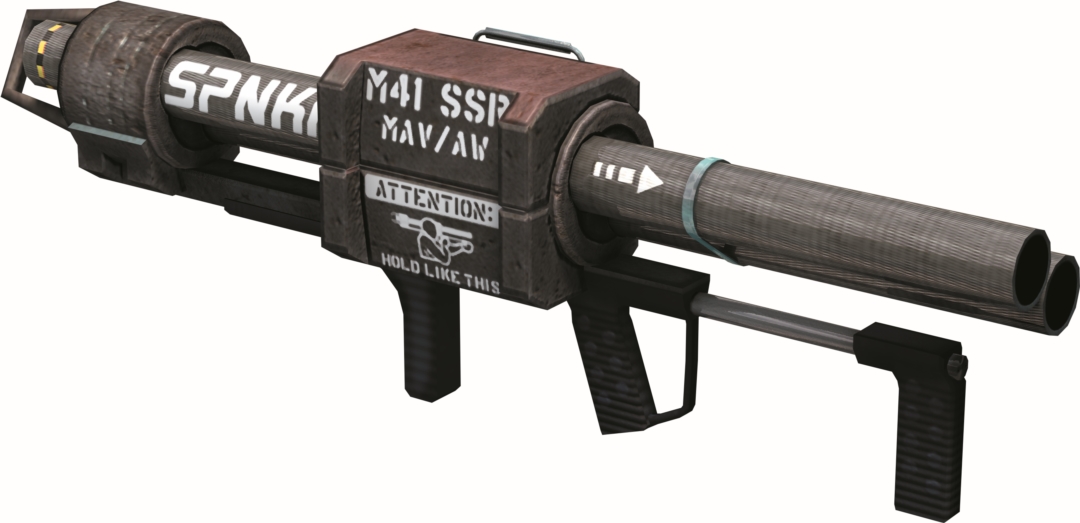


If you're playing along at home, your first reaction was probably “POWER WEAPONS!” And congratulations, you got the #1 answer on the board. But power weapons aren't the only resource in Halo.

Map objectives are another obvious resource. Whether it's Oddball, Hill time, the Flag, the Bomb. Someone says “Hey, take hill.” He's allocating a resource.

But from there, what qualifies as a resource becomes a lot more subtle. I'll make a bulleted list.
  • Power Weapons
  • Objectives
  • Power Positions
    • What? How can a position be a resource!? Power positions are important areas of the map which offer escape routes, sightlines, and combat advantages. But you don't want everyone to be in the power positions. Some players have to keep moving, pushing for objective, cutting off pushes, flushing out players, et cetera. Determining who gets to stay in the power position is allocating a resource.
  • Help
    • Other players responding to your call-outs, pushing behind you, or watching your sightlines are a resource. Your teammates are a resource. Who they decide to work with on a moment-to-moment basis determines who receives that resource.
    • As an example of a team that uses this, listen to Towey coach Evil Geniuses. Often, he will tell a player who has just spawned to “Go help x” – he's allocating the resource for the team and ensuring a player isn't left stranded on the enemy side.
  • Communication
    • Even call-outs are a resource. Because it's hard to hear when players talk over one another, it's important to make sure communication is streamlined. A player on the opposite side of the map from teammates should not be trying to talk over those who need to communicate their plans to work together (unless it is pertinent information to those three.) An isolated player making callouts of players his teammates have no possible way to see is flooding a resource, giving information that isn't valuable or useful.
  • Ammo
    • Apart from literally being a resource for your guns, ammo is a resource that sometimes has to be discussed among the team. In stalemate situations (especially H2A's Lockdown TS), a player with a Sniper may not need their Battle Rifle ammo, while his teammates need it for trading or creating shield advantages to set up a push. Allocating weapon ammo among teammates to ensure everyone is combat capable can be the difference between winning or losing a stalemate situation's resolution.

As you can see, there are actually several resources in Halo that need to be split up among the team. Knowing who needs to receive what resource at what time, or who should forego a resource to do something else (such as pushing up and letting the next player to spawn grab a power weapon on your side), are key to shot-calling toward victory.

What are the resources in LoL?

In League of Legends, there are even more resources to track. Many are less nuanced than in Halo, so I'll keep my bulleted list a bit more concise:
  • Gold (minion waves, tower gold, assists)
  • Experience (minion waves)
  • Farm (jungle)
  • Ganks (or pressure from a teammate's presence in general)
  • Vision (where your wards are)
  • Vision denial (where you clear enemy wards, who gets the ward kill)
  • Summoner spells (how many do you expend for a kill)
  • Abilities (especially ults, how many do you expend for a kill / to save someone / who do you use them on in a team fight)
  • Buffs (red/blue/abilities)
  • Globals (TP pressure, global range ultimate pressure)
  • Wave control (what waves you set up to slow push, what waves you just flash farm)

Much of LoL strategy revolves around power spikes and funneling farm into specific players. Whether it's to get them to their power spike sooner, or to get them into a state to counter an enemy power spike, you want to make sure farm goes where it's needed. Experience comes with farm. Who do you try to make sure stays ahead in levels? Do you sacrifice EXP on your support/jungler and rely on team fights / skirmishes to catapult them back with the catch-up mechanics of the game?
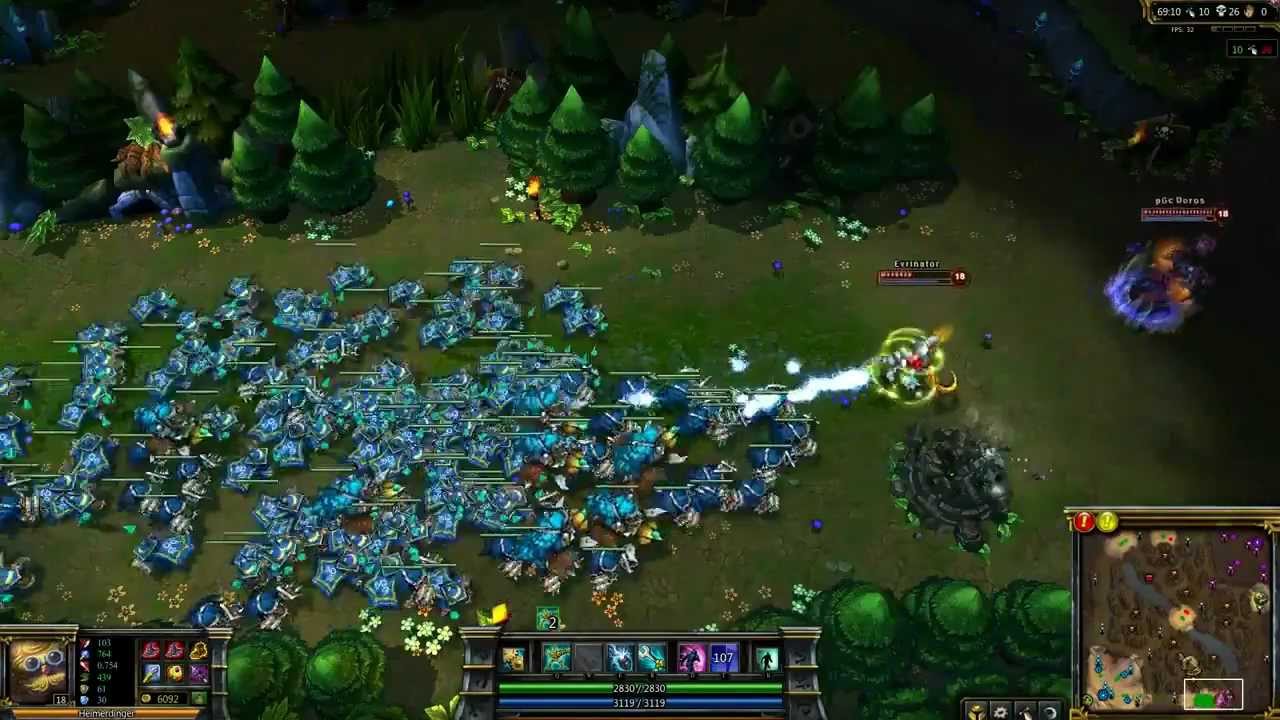


Ganks and jungle pressure can determine the outcome of a lane. Determining who gets said ganks may depend on champion match-up, skill match-up, or the opponent's priorities. As a shotcaller, you have to know who needs pressure when.

Expending too many summoner spells (or long cooldown ultimates) for a gank can leave you vulnerable for a long period of time. If you're planning a gank 90 seconds before Dragon, do you all flash to finish the kill and the moderate gold spike? Or, do you let him live, knowing you'll need those flashes for the potential team fight at Dragon? Those flashes could mean a tower kill. Or, if you're out of sync with the team, one flash could mean the play gets turned around. Before the play is made, the shotcaller should make it clear if you're burning summoners and ultimates or not.

Vision needs to be rotated depending on your current focus on the map. Pink wards are not meant to stay in the same place all game. They need to be moved to ensure zones of denial or longer lasting vision. Deep wards need to be placed to know what's coming in a situation. Sometimes, placing deep wards can be risky and requires the escort of your jungler as a support to get the wards down. (Note KT Rolster, or last season's Samsung White often having Score+Piccaboo or Dandy+Mata respectively synchronizing their backs and duo-invading early on to ensure they can get wards down together.)

In both games, it's important to be able to identify your resources and determine where they need to go. A good shotcaller must gauge who needs what when.

If you're struggling to determine how to allocate resources, ask yourself some questions when faced with a decision:
  • What are the victory conditions right now?
  • Who is important to fuel our path to victory?
  • Who is closest to the resource?
    • Do they need it?
  • Will we lose anything if x goes for this resource?
    • Is it worth it?
    • Who else could take it instead?
  • Are we transparent in our resource allocation?
    • Can/Will our opponents try to counter it?
  • Can we deny our opponents' resources?
  • X doesn't have the resources they should, do we sacrifice them and put resources elsewhere?
    • Or do we sacrifice elsewhere to put resources on them?
    • Which path is safer?

Obviously you can't ask yourself these questions each and every time a decision arrives. These are just an exercise to improve. As you improve, you'll find yourself giving better valuation and distribution naturally. As you begin to efficiently distribute resources in a game, you will find yourself with more advantages and leads to press in a game.


That's all for this relatively short bit. Part 5 will be a bit delayed, but I'll discuss how to identify less apparent advantages in order to determine when you have a lead or the ability to create a lead out of a mismatch.

Monday, September 7, 2015

Scrupulous Scrutiny: Improving your Self-Analysis in Reviewing Replays

So, you think you're pretty good at video games, huh? But you admit you're not the best. You know you make mistakes. You're humble enough to go back and watch replays of your gameplay to look for areas to improve. That's a good sign of a player who's going to improve. But what about when that VoD review doesn't seem to be helping you find what you're doing wrong? What if you think everything you're doing was right?

How do you approach VoD review in a way that ensures you're improving either the understanding of your mistakes or your understanding of the game?

I'm glad I asked!

If you're finding yourself unable to improve or find mistakes from reviewing your own gameplay, chances are you're not asking the right questions as you go through and watch. If you're not asking questions at all, well... I guess we found out why you're not improving.

Question everything. From everything you've done, to everything you see your opponent do, to everything your teammates do, to whatever's going on within the context of the rest of the game.

The most important question to ask when looking to improve:

Why did I do this?

If you can't understand why you did something, chances are high that it was a mistake. If you can't explain why you did something, you may need to explore the situation further. One thing to note, no matter how skilled you are at a game, the ability to understand something and to explain the same thing do not come hand in hand. Verbalizing instances is a separate skill and not always a necessary one for competitive gamers. (I refer to this mental iceberg often...) 

So, you've run into something you can't explain, but you're pretty sure you had a good reason for doing it. What do you do?

Pause the film. Ask, What are my options at this moment?

Before you answer the question, take a look at EVERY possible bit of information you can ingest. Don't answer based off whatever information you had at the time you made the decision to begin with. As you go, make a list of EVERY possible bit of information you can.

Take note of
  • enemy positions
  • ally positions
  • your own position
  • Weapons/Cooldowns/Abilities the enemy has available
  • Weapons/Cooldowns/Abilities your allies have available
  • Weapons/Cooldowns/Abilities you have available
  • Major objectives that are immediately relevant
  • Major objectives that may become relevant as the situation resolves
  • Major objectives that may become relevant after the situation resolves
  • Which players are reacting to the situation first
  • Which players seem oblivious to the situation

Now that you've taken in all of the above information, do you have a good idea of the number of options you have available? If not, let's make a short list of generic choices...
  • ATTACK THAT POOR BASTARD!
  • Run away! HE SKERRY! Don't let him start a fight!
  • HE SKERRY! HE STARTED DA FITE! Disengage!
  • Move to help teammate
  • Move too save teammate
  • Sacrifice yourself for teammate
  • Attempt to keep enemy from interfering outright
  • Stall an enemy from interfering
  • Isolate an enemy, then engage
  • Feign a fight, then back off into help from teammates
  • Pressure an objective somewhere else to try to deter the enemy from their current objective
  • Trade an objective somewhere else for enemy's current objective
  • Stall an enemy from their objective while your ally trades/takes more somewhere else.

These are just a few generic options that apply cross-genre. Evaluate how many of these options you have for the situation you haven't quite solved yet. For each time you're involved in engaging with the opponent (whether offensively or defensively), list the options you have for how to engage or disengage or stall for time for a teammate to help. Take note of which player is likely to get help first. Check all of the weapons or abilities you may use. Figure out which order of use gives the least windows for your opponent to react.

Throughout this process, you may often find you had options you didn't consider in the heat of the moment. Some of these options may be less optimal. Others may be much more optimal. Regardless, this analysis is a GOOD thing. It increases the amount of options weighing inside the intuitive mind during the game (Audley shut the fuck up about the fucking iceberg I get it okay?). Evaluating the effectiveness of the options while looking at the game analytically rather than while playing it increases your chances of making the right choice the next time.

But in the mean time... did you figure out why you made the decision in the first place?

No?

It's time to ask another question: What information did I miss?

No, not in your above evaluation. Now it's time to re-frame the situation from the whole picture you're currently looking at, back into the heat of the moment. When you made the decision, what information did you already have? Look carefully at what's going on. Did you see everything the first time? Look again. Did you notice any information you had access to that you may have missed before making the decision?

If everything seems to be in order and all the information you acted upon is there, then you ask the next question:
What assumptions did I make?

Because in most cases, you won't have full information when you're making the decision, you have to fill in the blanks. Whether you're doing this consciously or not, you're making assumptions about the state of other players. (If you don't believe me, think back to the last time you asked “WHY THE FUCK IS x HERE?” in a fit of rage after dying to something unexpected. Yep, you assumed he would be playing differently.)

Compare your assumptions to the big picture / full information scenario. Were they correct? Were they wrong? SHOULD they have been correct (was someone else playing sub-optimally or better than you understood)?

Assumptions are not a bad thing to make in games, but they should definitely be taken lightly. If you act on an incorrect assumption, you're making a low percentage play. I mentioned in Part 2 of my shotcalling blog that you should almost always assume your opponent is going to play correctly / make the best decisions. If something smells like bait, it probably is. If you're blind to an objective being taken, but it's the right decision to take or bait that objective, that's probably what's going on.

Unlike your opponents however, it's often wise to assume your teammates (especially in solo queue) are going to make the wrong play / a bad decision. This is why communication is important, whether you communicate through typing, pings, or just saying “Hey follow what I do and we'll win.” – if you're in a situation where voice chat is able to be done, explain what you're intending to do in order to avoid your teammates having to assume what you will do, as well as to avoid assuming what your teammates will do (assuming you all talk in terms of intentions.)

By this point, you should have gotten an idea of why you made the decision in the first place (and if not, you may be fucked beyond all hope, or may just need to ask someone better than you for help.)

But, along the way, you may have discovered some better options that you could have done. So let's backtrack to the “What are my options?” and ask a second question: How did my opponent react to my decision?

If they reacted aggressively, there's a good chance they had some information you were not accounting for (or they made an assumption they were stronger in the moment.) If they reacted passively, they made the assessment or assumption that you were the stronger force in the instance. You can gloss over your opponent's options/assumptions to try to better understand why your opponent reacted the way they did, but often times their initial reaction gives plenty of information about their self-perceived state.

While still focusing on your opponent's reaction, there's one more question to ask. Regardless of their reaction (which, as I said is a decent barometer for how they expected the situation to play out), ask How could I have altered his perceptions?

If you were attempting to bait your opponent into making a bad decision, but he reacted passively, did he have information that could have been denied? If you were attempting to peacock and he aggressed onto you, did he evaluate you were weaker? Did he underestimate you? Overestimate?

I assume you're reading this because you're doing part of a team game. So that means you have teammates also making decisions on the fly. So after you've figured out why your opponent reacted the way he did...it's time to ask:

How did my teammates react to my decision?

If there was a teammate nearby you expected to help or join in on the play (or in the case of LoL, across map with teleport you expected to come in) then ask: Who could've helped me? Then ask what their options were. Skim your teammates' nearby opponents' option. Could the opponent have stopped your teammate from helping you? Then chances are you expected too much of your teammate. (Was this a miscommunication or a bad assumption from you?)

Unless your team has some sort of shotcalling schematic set up (which is unlikely in the case you're self-reviewing to improve your solo queue gameplay), then chances are you're operating off assumptions and your teammates are making decisions based off reactions rather than cohesive plans made ahead of time. If your expectations of a teammate are at odds with how your teammate actually reacted, either your communication needs improved, or one of you made a mistake.

Take on your teammate's perspective of your play for a moment. If roles were reversed, what would you have expected your teammate to do?

By now you have a very clear picture of why you did what you did. And along the way, you may have found a few areas where your expectations of the situation didn't match up with how it actually played out.

Now let's frame the situation a little more by asking another question:
How did I get in this situation in the first place?

Oftentimes when you're in a position to make a mistake, you often made other decisions on the way there. Granted, if you're asking “Why did I do this?” over every step of the way, you'll already have this question answered. But in laying out other options, you may find a way to avoid putting yourself in the position to make the mistake. Ask yourself, What could I have done to avoid this situation?

After acknowledging your potential pre-emptive routes, it's time to look at the other end of the chronological spectrum...the future. How can the result of this situation play out?

Consider options both good and bad; proactive, reactive, aggressive, passive, whether you're trying to catch up or get further ahead. Pick what you think the best decision is from the current situation. Resume your video.

Did you make the decision you expected to be the correct one?

You didn't? What did you do? Well now... it's time to ask yourself...

  1. Why did I do this?
    1. What are my options at the moment?
      1. What aggressive options do I have?
      2. What passive options do I have?
      3. Did I take the best option?
    2. What information did I miss?
      1. Did I see everything right the first time / in game?
      2. Was there something else I should have seen that I didn't?
    3. What assumptions did I make?
      1. Were my assumptions correct/incorrect?
      2. SHOULD they have been correct?
        1. Did I assume the best of my opponents?
        2. Did I assume the worst of my teammates?
        3. Did I properly communicate my intentions to teammates?
    4. How did my opponent react to my decision?
      1. What were his options?
      2. What were his assumptions?
      3. How could I have altered his perceptions?
        1. Does he have more information than I expected?
        2. Could I have appeared stronger?
        3. Did he mis-evaluate me?
    5. How did my teammates react to my decision?
      1. Who could have helped me?
      2. What were their options?
        1. Did I expect too much of them?
          • Was this a miscommunication or a bad assumption?
        2. What did they expect of me?
  2. How did I get in this situation in the first place?
    1. What could I have done to avoid this situation?
  3. How can the result of this situation play out?
    1. What is the best decision from here?
      1. Did I make that decision?

Just rinse and repeat this rubric of rhetoric as you review your replays. You will find you better understand your own gameplay, and if you can find where your assumptions, assessments, or expectations are wrong, you can begin to improve your ability to make the right decisions in the future by correcting your approach.


So, happy VoD-hunting, self-reviewing gamer. Hope this helps!

Saturday, September 5, 2015

Calling the Shots: Part 2 – Limited Range


Some time last year, I started a multi-part series about shotcalling in competitive gaming, starting with discussing victory conditions. I said I wasn't sure when the next part would come, but I didn't mean to leave you in suspense for 16 months (oops!).

Anyway, it's time to revive the series with the next important part of shotcalling. Apart from knowing what it will take to win a game, there is one more important piece of information: KNOW YOUR LIMITS.

Sorry, Cady, that's just not true.


When you're ahead, you almost always want to get further ahead. You want to put the game out of reach of your opponents. But in order to do that, you need to make sure you don't end up overreaching and making mistakes.

Too many League of Legends games get thrown by a team believing they can stay for the inhibitor and ending up getting aced, losing Baron, losing an ensuing team fight, and consequently the game. Halo games can be thrown over a forced flag run leading to the team all dead and enabling the team to set up a counter cap (RIP every Sanc Flag game ever.) You were too confident in your abilities to make a play that wasn't going to happen, and gave away the game.

But Audley, how do I learn my limits?

Step 1: Play more. Be willing to experiment whenever the stakes are low. You learn limits through practice. Whether that practice is directed practice like scrims or micro drills (practicing CSing in LoL or jumps in Halo), practice helps you learn what you can and can't do. Even if you're playing solo queue, don't be afraid to try new things. You can never know if something has the potential to work unless you try it.

Competitive play revolves around high percentage plays and consistency. Practice does not. Practice is where you not only improve your play, but learn exactly what you can and cannot do.

Part of this is why players with thousands of games on a single champion in LoL tend to be really good at that champion – they know what risks aren't really risks. They've been in the situation before. Their mental iceberg tells them “Hey, we've been here. Do this.” – they know their limits and come away with an individual play that works.

But Audley, I know my personal limits. How do I learn the limits of the 3-4 other guys on my team?”

I'm glad you asked, Reader. And for that, I point to one of the world's best shot callers ever to grace Summoner's Rift in LoL. Mata, formerly of Samsung White, now on Vici Gaming. Although he's not at Worlds this year, it's pretty hard to say Mata is to fault for Vici's failures. The team played a fantastic cerebral style of play and won games off incredibly smart plays. With MVP / Samsung White, Mata won two seasons of OGN Champions and a World Championship. It was fairly common knowledge Mata was the shotcaller of the team. When he was on point, the team executed as a well-oiled machine. When he was thrown off his game, the team looked like a mess. When White were on point, it was hard to find a player more aware of how to win than Mata.


But there's one fact about Mata most people are unaware of: he had multiple Korean solo queue accounts in Challenger tier. And on each one, he mained a different role. He wasn't a support only player in Solo Queue. He also played Jungle and (I believe?) mid lane extensively. This enables him to know the limits of other lanes on his team. It helps him learn match-ups and the needs of his teammates.

You don't necessarily have to attempt to play other roles to improve as a shotcaller (though, it definitely helps) – at the very least, however, you should try to observe your teammates in practice and discuss their mindset during their games (or while watching replays together).

Ask a few questions such as
  • Why did you do that?
  • What would happen if you did this...?
  • (In the case that he's losing) – What do you need to come back from this?
  • (In the case that he's winning) – How do you keep your opponent from coming back?
  • How do you deal with pressure in this situation?
  • How could pressure be relieved in this situation? ( ͡° ͜ʖ ͡°)

Learn how your teammates think. Learn their limits, or at least the limits of their style of play. Knowing these helps you know what you can get away with.

Other than practice and post-game discussion, there is one other important way to assess your limits, and is key during a game.

Step 2: Get more information. Most competitive games are Imperfect Information games, where you do not know everything that is going on for the other team. Whether hidden in fog of war or simply not visible to your personal camera, knowing what's going on elsewhere is important to knowing what your limits can be.

It's probably not a coincidence Mata is one of the best shotcallers in the world and also one of the supports with the most wards placed. In League of Legends, vision is information. Madlife rose to power known for being one of the first players to time even the most minute of cooldowns of his opponents.


Beyond mini-maps and vision control in LoL, communication is your key to information influx. This applies to any game – especially First Person Shooters. A mistake many make is simply communicating what's going on among enemies. Calling out targets, calling out weapons, et cetera.


If you want to know your limits, you also need to know your teammates' status. In shooters, communication focused on telling your teammates where you are helps them know how soon they could have help or come help, or where their team's gaps in vision or sight line coverage may be. In League of Legends, it may help them know when your important engage abilities will be ready to go.

Whether you're the shotcaller or not, focus on proactive communication. Speak about what you CAN do, or SHOULD do in a situation. It helps the team create a much more clear picture of how to move forward, rather than focusing on what an enemy is capable of. Think in terms of enemy perfect execution, and plan the best way to play against it. Always give your opponents the respect of assuming they will play the game properly.

Silent moments are moments where information isn't being generated. Information should be generated constantly throughout a game. If no one is talking, get the wheels turning by asking questions as the shotcaller. “Can you do this?” “Can we do this?” “Where can we push?” “What [cooldowns/weapons] do you have?” “How close are you to [item/weapon/location]?”

TALK.  TALK MORE.  NEVER STOP TALKING.

You'll never have a complete picture of the game. You must make decisions based off an incompleted jigsaw, or a painting where the colors haven't been blended all the way just yet. Every bit of information your teammates feed to you fill the picture just a little bit more to help you know what call to make, or what calls to avoid as you learn the situation a little bit better.

But regardless, getting into the minds of your teammates in and out of game and objectively assessing yours and their abilities will help you KNOW YOUR LIMITS as a team, and as a result, help you call the shots in a way that reduces mistakes and leads your team to more victories.

I'm not sure when part 3 will come (hopefully it won't be another 16 months ;D) but this series isn't done just yet.

Also, I've added a Paypal Donate link to the main page of my blog. If you enjoy my blogs and would like to see more of them, I encourage you to Donate in order to help me get closer to quitting my day job in fast food to focus on writing and game design. If you can't afford/don't want to donate but still enjoy the blog, PLEASE, comment / tweet / message me and let me know what you enjoy / what you'd like to see more of! I've got a few plans for upcoming entries, and I intend to write more in the upcoming days, but any support you can give me (verbal or monetary) is greatly appreciated!

Audley out.