Showing posts with label halo. Show all posts

Saturday, December 12, 2015

Ambiguous Revelation: The Dangers of Uncertain Exposure

It's been a while since I've worked on any Audley Enough stuff. But today, while reading a Reddit post distressing over the lack of power supports have in League of Legends these days due to repeated nerfs to vision control over the last few seasons... I thought it was about time I talked about a subject that's been weighing on me for a few weeks now.

That subject is what I'm labeling Ambiguous Revelation...and it's a very bad thing to have in competitive games centered around imperfect information.

When I say Ambiguous Revelation, I specifically mean, “When you give away information to the enemy, but cannot be sure if you've given away that information.”

Because imperfect information games are focused on reacting to what information you have and attempting to control what information you give away to your opponent, it's imperative to be able to determine what that information is.

Since League of Legends is the game that triggered this blog for me, I'll start with talking about its Sight Wards. And it's not the first time I've referred to invisible wards as bad game design. Hell, Ghostcrawler himself has mentioned he thinks LoL's current state of vision control is the opposite of fun (which, while I agree, I feel his approach to changing that is heavy-handed and ignores the fact that some players actually enjoy playing intelligently rather than playing to win via execution.)

Stealthed Sight Wards have a few problems:
  • They have very little interactivity on their own, and are a great example of power without gameplay. Riot hate auras in League of Legends because it's hard to see how much power you're giving with them. Vision is similar.
  • They have very poor Counterplay. While generally, you can sweep them or kill them with pinks if you know where they are...champions without an AA reset cannot kill them on their own upon them being placed, nor can you kill them if you don't already know where they are.
  • They are not good for Clarity. Riot have alleviated this slightly with how trinket wards work in this season with the “ward debris” system for showing where wards WERE placed, but while a ward is stealthed and doing its job, there's almost no way to tell if you have been revealed.

Of course, the last point isn't true around lanes at the highest level of play – you can observe the opponent in that lane for behavioral changes to gauge where a ward was or wasn't placed. It leads to a level of Yomi layering where the player may feign ignorance and buy time for his teammates to make a counterplay.

But when you do not already have vision of nearby players, then you cannot be sure whether or not you are giving information to the enemy team...and in this case, the best option is to err on the side of caution and assume you WOULD be giving away information, thus electing not to go there.

Ambiguous Revelation hits an extreme in high level games of Halo, when the Motion Tracker is enabled. The Motion Tracker is similar to a radar in that it reveals nearby players, but it only does so if they are moving full speed or shooting.

If you are standing still or crouching, you do not show up on the Motion Tracker, and this is an enormous problem for competitive play. If you approach a high traffic area at full speed, and an enemy is hiding around the corner, they know you are coming, but you have no idea that they are there, nor that they know you are coming. It's a Revelation to the opponent that is unclear to you. Because of this, the “correct” play when ever approaching trafficked areas alone is to instead play it extremely slowly and crouch with your best CQB option ready. If they aren't there, you've wasted time and bored yourself with crouching. If they are there, you've got your spray and pray ready for combat.

It leads to really slow, dull gameplay.

While MLG had control of Halo, they left the Motion Tracker disabled to avoid this issue of Ambiguous Revelatiton in lieu of preventing the sharing of free information at all, leaving it up to the players at the highest level to figure out the information on their own through awareness and communication.

Let's say hypothetically 343 insist we need to keep some form of radar, for the sake of casual audience. There are a few approaches they could take to erase Ambiguous Revelation while keeping the flow of information in similar circumstances.

  1. Make the Motion Tracker flash/change colors when you have been revealed on another player's Motion Tracker. Do NOT reveal the location of the player who detected you.
    1. This change alerts you that you have been detected, removing the Ambiguity of the Revelation, but still puts the advantage in the hands of the opponent, as they know your exact location, while you only know that you are in range of the person.
  2. Convert the Motion Tracker to a full-blown Radar, revealing all players as long as they are in range of you.
    1. This change puts the advantage in the hands of the aggressor, giving them free information just for moving around the map. A player constantly moving can spot immobile enemies, even without actually getting them in their sights.
  3. Convert the Motion Tracker into a “spotter” system – If a player is shooting, they show up. They don't need to know whether or not they are near an enemy player, because by shooting they are giving up SOUND that fills the entire map, ensuring they know enemies know their location. If a player is BEING SHOT (in the cross-hairs of an enemy AND taking damage), they show up. Again, they know their location is compromised. Moving or making local sounds (thrust, sprint) would not reveal you, as these sounds are too close range to be certain you are revealed. With this system, the range could be greatly increased without much effect on gameplay (and it actually reduces the advantage players with better sound equipment have over their broke peers).

Those are just a few alternatives off the top of my head, all of which would improve how the game plays at the competitive level versus the currently enabled Motion Tracker in Halo 5 – a full-blown radar, although noobish and “unfair” would have less negative effects on the outcome of gameplay, as players would instead be encouraged to keep moving rather than to stop and sit still, autos primed.

Because not knowing whether your opponent knows where you are or not leads to assuming they'll find out if you play as though they don't. Which leads to playing more cautiously. Which leads to immobile, stale gameplay.

Back on the subject of League of Legends, how do you reconcile this with invisible wards?

DotA2 has quite an interesting answer to that, with its inclusion of Smoke of Deceit. Smoke of Deceit stealths you and all nearby allies for a moderate duration, but attacking or moving within a specific range of enemy units will break your stealth. It's literally a tool to grant you and your team the ability not to be seen by regular wards. In many games of DotA, you will see teams purchase Smoke and make aggressive plays, knowing with absolute certainty they are undetected until they are upon their target. Because they are unambigulous unrevealed, they are able to make this play. Of course, if your game is League of Legends, there's one player on the team who EVERY GAME relies on being unrevealed as long as possible to exert the most pressure on the map...and because of that, vision needs to at least be able to detect people consistently.

Being revealed by abilities in League of Legends, whether Hawkshot, Traps, or various skillshots always give an icon of two eyes on the player, showing them they have been spotted.

One potential way to handle Warding is to drastically reduce the vision radius of wards but make them untargetable – similar to how the Scuttle Crab's shrine works. This would grant counterplay to players who have detected them, as they could move around them. In the case of Wards being placed in brush, after spotting the ward once, players could know how to avoid being spotted as they pass back by that brush a second time.

Another method would be to replace Wards with items that work similarly to Nidalee Traps...granting only an immediate burst of vision on their own, but then simply resting dormant until triggered by an enemy walking directly over them. Again, enemies can avoid the detection by simply moving away from them and taking a different route, but if they happened to trigger them, they know they have been detected and know their options for decisions based off that detection. They are not limited by anticipation of whether they have been detected, and can make smarter decisions based off confirmed information.

In both of these cases, players don't have to fear they have been detected without their knowledge, greatly increasing the amount of aggressive decision-making they are allowed to make, and increasing the interactivity of the game as well as the enjoyment aspect for spectators who don't wish to observe a golf match.

By improving the clarity of whether or not a player is detected, players have less reason to play scared or overly cautious due to inability to valuate their potential – and improves the ability for a player to valuate based off facts, rather than assumptions, and thus improves the health of the game as a whole at its top level of play.

Turning back to Halo momentarily, there are some options that could be explored WITHOUT removing the Motion Tracker in its current incarnation, by modifying one part of the Halo sandbox, its grenades. Most modern shooters include smoke grenades, flash bangs, et cetera to empower teams to push through choke points without being gunned down systematically.

Halo's Frag Grenades could be given a smoking component (Halo 2's actually had that) to enable you to get around a corner unseen (though detected), while its Plasma Grenades could act as a flash bang (they do distort vision in Halo 5), stunning players who look directly into the exploding sun. Splinter Grenades could revert to Pulse Grenades, and send out a radar pulse as they detonate, revealing players on motion tracker if they are nearby its explosion. Each of these would encourage players to grenade around corners before rushing and enable them to have counterplay for corner-crouchers...without actually requiring the removal of the casual playerbase's crutch.


That concludes my discussion about Ambiguous Revelation – I think it's a subject for much debate, but personally I feel it brings more negatives than positives when it comes to how it affects high level competitive play...and should be avoided wherever possible.

Saturday, September 12, 2015

Calling the Shots Part 4 – Taking Rounds

We've talked victory conditions and knowing your limits, and even a bit on when it's okay to just go crazy. Today, I'm going to talk about how to allocate resources.

In some team environments, one player determines who gets what resource over the course of a game. In others, it's simply first come, first serve. Maybe it depends on the situation. Maybe it depends on the victory conditions. But regardless, knowing what qualifies as a resource and how to determine who gets it is an important aspect of shot-calling.

Since the majority of my audience are Halo players, I'll address the context of resources in Halo first.

What are the resources in Halo?


If you're playing along at home, your first reaction was probably “POWER WEAPONS!” And congratulations, you got the #1 answer on the board. But power weapons aren't the only resource in Halo.

Map objectives are another obvious resource. Whether it's Oddball, Hill time, the Flag, the Bomb. Someone says “Hey, take hill.” He's allocating a resource.

But from there, what qualifies as a resource becomes a lot more subtle. I'll make a bulleted list.
  • Power Weapons
  • Objectives
  • Power Positions
    • What? How can a position be a resource!? Power positions are important areas of the map which offer escape routes, sightlines, and combat advantages. But you don't want everyone to be in the power positions. Some players have to keep moving, pushing for objective, cutting off pushes, flushing out players, et cetera. Determining who gets to stay in the power position is allocating a resource.
  • Help
    • Other players responding to your call-outs, pushing behind you, or watching your sightlines are a resource. Your teammates are a resource. Who they decide to work with on a moment-to-moment basis determines who receives that resource.
    • As an example of a team that uses this, listen to Towey coach Evil Geniuses. Often, he will tell a player who has just spawned to “Go help x” – he's allocating the resource for the team and ensuring a player isn't left stranded on the enemy side.
  • Communication
    • Even call-outs are a resource. Because it's hard to hear when players talk over one another, it's important to make sure communication is streamlined. A player on the opposite side of the map from teammates should not be trying to talk over those who need to communicate their plans to work together (unless it is pertinent information to those three.) An isolated player making callouts of players his teammates have no possible way to see is flooding a resource, giving information that isn't valuable or useful.
  • Ammo
    • Apart from literally being a resource for your guns, ammo is a resource that sometimes has to be discussed among the team. In stalemate situations (especially H2A's Lockdown TS), a player with a Sniper may not need their Battle Rifle ammo, while his teammates need it for trading or creating shield advantages to set up a push. Allocating weapon ammo among teammates to ensure everyone is combat capable can be the difference between winning or losing a stalemate situation's resolution.

As you can see, there are actually several resources in Halo that need to be split up among the team. Knowing who needs to receive what resource at what time, or who should forego a resource to do something else (such as pushing up and letting the next player to spawn grab a power weapon on your side), are key to shot-calling toward victory.

What are the resources in LoL?

In League of Legends, there are even more resources to track. Many are less nuanced than in Halo, so I'll keep my bulleted list a bit more concise:
  • Gold (minion waves, tower gold, assists)
  • Experience (minion waves)
  • Farm (jungle)
  • Ganks (or pressure from a teammate's presence in general)
  • Vision (where your wards are)
  • Vision denial (where you clear enemy wards, who gets the ward kill)
  • Summoner spells (how many do you expend for a kill)
  • Abilities (especially ults, how many do you expend for a kill / to save someone / who do you use them on in a team fight)
  • Buffs (red/blue/abilities)
  • Globals (TP pressure, global range ultimate pressure)
  • Wave control (what waves you set up to slow push, what waves you just flash farm)

Much of LoL strategy revolves around power spikes and funneling farm into specific players. Whether it's to get them to their power spike sooner, or to get them into a state to counter an enemy power spike, you want to make sure farm goes where it's needed. Experience comes with farm. Who do you try to make sure stays ahead in levels? Do you sacrifice EXP on your support/jungler and rely on team fights / skirmishes to catapult them back with the catch-up mechanics of the game?


Ganks and jungle pressure can determine the outcome of a lane. Determining who gets said ganks may depend on champion match-up, skill match-up, or the opponent's priorities. As a shotcaller, you have to know who needs pressure when.

Expending too many summoner spells (or long cooldown ultimates) for a gank can leave you vulnerable for a long period of time. If you're planning a gank 90 seconds before Dragon, do you all flash to finish the kill and the moderate gold spike? Or, do you let him live, knowing you'll need those flashes for the potential team fight at Dragon? Those flashes could mean a tower kill. Or, if you're out of sync with the team, one flash could mean the play gets turned around. Before the play is made, the shotcaller should make it clear if you're burning summoners and ultimates or not.

Vision needs to be rotated depending on your current focus on the map. Pink wards are not meant to stay in the same place all game. They need to be moved to ensure zones of denial or longer lasting vision. Deep wards need to be placed to know what's coming in a situation. Sometimes, placing deep wards can be risky and requires the escort of your jungler as a support to get the wards down. (Note KT Rolster, or last season's Samsung White often having Score+Piccaboo or Dandy+Mata respectively synchronizing their backs and duo-invading early on to ensure they can get wards down together.)

In both games, it's important to be able to identify your resources and determine where they need to go. A good shotcaller must gauge who needs what when.

If you're struggling to determine how to allocate resources, ask yourself some questions when faced with a decision:
  • What are the victory conditions right now?
  • Who is important to fuel our path to victory?
  • Who is closest to the resource?
    • Do they need it?
  • Will we lose anything if x goes for this resource?
    • Is it worth it?
    • Who else could take it instead?
  • Are we transparent in our resource allocation?
    • Can/Will our opponents try to counter it?
  • Can we deny our opponents' resources?
  • X doesn't have the resources they should, do we sacrifice them and put resources elsewhere?
    • Or do we sacrifice elsewhere to put resources on them?
    • Which path is safer?

Obviously you can't ask yourself these questions each and every time a decision arrives. These are just an exercise to improve. As you improve, you'll find yourself giving better valuation and distribution naturally. As you begin to efficiently distribute resources in a game, you will find yourself with more advantages and leads to press in a game.


That's all for this relatively short bit. Part 5 will be a bit delayed, but I'll discuss how to identify less apparent advantages in order to determine when you have a lead or the ability to create a lead out of a mismatch.

Monday, September 7, 2015

Scrupulous Scrutiny: Improving your Self-Analysis in Reviewing Replays

So, you think you're pretty good at video games, huh? But you admit you're not the best. You know you make mistakes. You're humble enough to go back and watch replays of your gameplay to look for areas to improve. That's a good sign of a player who's going to improve. But what about when that VoD review doesn't seem to be helping you find what you're doing wrong? What if you think everything you're doing was right?

How do you approach VoD review in a way that ensures you're improving either the understanding of your mistakes or your understanding of the game?

I'm glad I asked!

If you're finding yourself unable to improve or find mistakes from reviewing your own gameplay, chances are you're not asking the right questions as you go through and watch. If you're not asking questions at all, well... I guess we found out why you're not improving.

Question everything. From everything you've done, to everything you see your opponent do, to everything your teammates do, to whatever's going on within the context of the rest of the game.

The most important question to ask when looking to improve:

Why did I do this?

If you can't understand why you did something, chances are high that it was a mistake. If you can't explain why you did something, you may need to explore the situation further. One thing to note, no matter how skilled you are at a game, the ability to understand something and to explain the same thing do not come hand in hand. Verbalizing instances is a separate skill and not always a necessary one for competitive gamers. (I refer to this mental iceberg often...) 

So, you've run into something you can't explain, but you're pretty sure you had a good reason for doing it. What do you do?

Pause the film. Ask, What are my options at this moment?

Before you answer the question, take a look at EVERY possible bit of information you can ingest. Don't answer based off whatever information you had at the time you made the decision to begin with. As you go, make a list of EVERY possible bit of information you can.

Take note of
  • enemy positions
  • ally positions
  • your own position
  • Weapons/Cooldowns/Abilities the enemy has available
  • Weapons/Cooldowns/Abilities your allies have available
  • Weapons/Cooldowns/Abilities you have available
  • Major objectives that are immediately relevant
  • Major objectives that may become relevant as the situation resolves
  • Major objectives that may become relevant after the situation resolves
  • Which players are reacting to the situation first
  • Which players seem oblivious to the situation

Now that you've taken in all of the above information, do you have a good idea of the number of options you have available? If not, let's make a short list of generic choices...
  • ATTACK THAT POOR BASTARD!
  • Run away! HE SKERRY! Don't let him start a fight!
  • HE SKERRY! HE STARTED DA FITE! Disengage!
  • Move to help teammate
  • Move too save teammate
  • Sacrifice yourself for teammate
  • Attempt to keep enemy from interfering outright
  • Stall an enemy from interfering
  • Isolate an enemy, then engage
  • Feign a fight, then back off into help from teammates
  • Pressure an objective somewhere else to try to deter the enemy from their current objective
  • Trade an objective somewhere else for enemy's current objective
  • Stall an enemy from their objective while your ally trades/takes more somewhere else.

These are just a few generic options that apply cross-genre. Evaluate how many of these options you have for the situation you haven't quite solved yet. For each time you're involved in engaging with the opponent (whether offensively or defensively), list the options you have for how to engage or disengage or stall for time for a teammate to help. Take note of which player is likely to get help first. Check all of the weapons or abilities you may use. Figure out which order of use gives the least windows for your opponent to react.

Throughout this process, you may often find you had options you didn't consider in the heat of the moment. Some of these options may be less optimal. Others may be much more optimal. Regardless, this analysis is a GOOD thing. It increases the amount of options weighing inside the intuitive mind during the game (Audley shut the fuck up about the fucking iceberg I get it okay?). Evaluating the effectiveness of the options while looking at the game analytically rather than while playing it increases your chances of making the right choice the next time.

But in the mean time... did you figure out why you made the decision in the first place?

No?

It's time to ask another question: What information did I miss?

No, not in your above evaluation. Now it's time to re-frame the situation from the whole picture you're currently looking at, back into the heat of the moment. When you made the decision, what information did you already have? Look carefully at what's going on. Did you see everything the first time? Look again. Did you notice any information you had access to that you may have missed before making the decision?

If everything seems to be in order and all the information you acted upon is there, then you ask the next question:
What assumptions did I make?

Because in most cases, you won't have full information when you're making the decision, you have to fill in the blanks. Whether you're doing this consciously or not, you're making assumptions about the state of other players. (If you don't believe me, think back to the last time you asked “WHY THE FUCK IS x HERE?” in a fit of rage after dying to something unexpected. Yep, you assumed he would be playing differently.)

Compare your assumptions to the big picture / full information scenario. Were they correct? Were they wrong? SHOULD they have been correct (was someone else playing sub-optimally or better than you understood)?

Assumptions are not a bad thing to make in games, but they should definitely be taken lightly. If you act on an incorrect assumption, you're making a low percentage play. I mentioned in Part 2 of my shotcalling blog that you should almost always assume your opponent is going to play correctly / make the best decisions. If something smells like bait, it probably is. If you're blind to an objective being taken, but it's the right decision to take or bait that objective, that's probably what's going on.

Unlike your opponents however, it's often wise to assume your teammates (especially in solo queue) are going to make the wrong play / a bad decision. This is why communication is important, whether you communicate through typing, pings, or just saying “Hey follow what I do and we'll win.” – if you're in a situation where voice chat is able to be done, explain what you're intending to do in order to avoid your teammates having to assume what you will do, as well as to avoid assuming what your teammates will do (assuming you all talk in terms of intentions.)

By this point, you should have gotten an idea of why you made the decision in the first place (and if not, you may be fucked beyond all hope, or may just need to ask someone better than you for help.)

But, along the way, you may have discovered some better options that you could have done. So let's backtrack to the “What are my options?” and ask a second question: How did my opponent react to my decision?

If they reacted aggressively, there's a good chance they had some information you were not accounting for (or they made an assumption they were stronger in the moment.) If they reacted passively, they made the assessment or assumption that you were the stronger force in the instance. You can gloss over your opponent's options/assumptions to try to better understand why your opponent reacted the way they did, but often times their initial reaction gives plenty of information about their self-perceived state.

While still focusing on your opponent's reaction, there's one more question to ask. Regardless of their reaction (which, as I said is a decent barometer for how they expected the situation to play out), ask How could I have altered his perceptions?

If you were attempting to bait your opponent into making a bad decision, but he reacted passively, did he have information that could have been denied? If you were attempting to peacock and he aggressed onto you, did he evaluate you were weaker? Did he underestimate you? Overestimate?

I assume you're reading this because you're doing part of a team game. So that means you have teammates also making decisions on the fly. So after you've figured out why your opponent reacted the way he did...it's time to ask:

How did my teammates react to my decision?

If there was a teammate nearby you expected to help or join in on the play (or in the case of LoL, across map with teleport you expected to come in) then ask: Who could've helped me? Then ask what their options were. Skim your teammates' nearby opponents' option. Could the opponent have stopped your teammate from helping you? Then chances are you expected too much of your teammate. (Was this a miscommunication or a bad assumption from you?)

Unless your team has some sort of shotcalling schematic set up (which is unlikely in the case you're self-reviewing to improve your solo queue gameplay), then chances are you're operating off assumptions and your teammates are making decisions based off reactions rather than cohesive plans made ahead of time. If your expectations of a teammate are at odds with how your teammate actually reacted, either your communication needs improved, or one of you made a mistake.

Take on your teammate's perspective of your play for a moment. If roles were reversed, what would you have expected your teammate to do?

By now you have a very clear picture of why you did what you did. And along the way, you may have found a few areas where your expectations of the situation didn't match up with how it actually played out.

Now let's frame the situation a little more by asking another question:
How did I get in this situation in the first place?

Oftentimes when you're in a position to make a mistake, you often made other decisions on the way there. Granted, if you're asking “Why did I do this?” over every step of the way, you'll already have this question answered. But in laying out other options, you may find a way to avoid putting yourself in the position to make the mistake. Ask yourself, What could I have done to avoid this situation?

After acknowledging your potential pre-emptive routes, it's time to look at the other end of the chronological spectrum...the future. How can the result of this situation play out?

Consider options both good and bad; proactive, reactive, aggressive, passive, whether you're trying to catch up or get further ahead. Pick what you think the best decision is from the current situation. Resume your video.

Did you make the decision you expected to be the correct one?

You didn't? What did you do? Well now... it's time to ask yourself...

  1. Why did I do this?
    1. What are my options at the moment?
      1. What aggressive options do I have?
      2. What passive options do I have?
      3. Did I take the best option?
    2. What information did I miss?
      1. Did I see everything right the first time / in game?
      2. Was there something else I should have seen that I didn't?
    3. What assumptions did I make?
      1. Were my assumptions correct/incorrect?
      2. SHOULD they have been correct?
        1. Did I assume the best of my opponents?
        2. Did I assume the worst of my teammates?
        3. Did I properly communicate my intentions to teammates?
    4. How did my opponent react to my decision?
      1. What were his options?
      2. What were his assumptions?
      3. How could I have altered his perceptions?
        1. Does he have more information than I expected?
        2. Could I have appeared stronger?
        3. Did he mis-evaluate me?
    5. How did my teammates react to my decision?
      1. Who could have helped me?
      2. What were their options?
        1. Did I expect too much of them?
          • Was this a miscommunication or a bad assumption?
        2. What did they expect of me?
  2. How did I get in this situation in the first place?
    1. What could I have done to avoid this situation?
  3. How can the result of this situation play out?
    1. What is the best decision from here?
      1. Did I make that decision?

Just rinse and repeat this rubric of rhetoric as you review your replays. You will find you better understand your own gameplay, and if you can find where your assumptions, assessments, or expectations are wrong, you can begin to improve your ability to make the right decisions in the future by correcting your approach.


So, happy VoD-hunting, self-reviewing gamer. Hope this helps!

Saturday, September 5, 2015

Calling the Shots: Part 2 – Limited Range


Some time last year, I started a multi-part series about shotcalling in competitive gaming, starting with discussing victory conditions. I said I wasn't sure when the next part would come, but I didn't mean to leave you in suspense for 16 months (oops!).

Anyway, it's time to revive the series with the next important part of shotcalling. Apart from knowing what it will take to win a game, there is one more important piece of information: KNOW YOUR LIMITS.

Sorry, Cady, that's just not true.


When you're ahead, you almost always want to get further ahead. You want to put the game out of reach of your opponents. But in order to do that, you need to make sure you don't end up overreaching and making mistakes.

Too many League of Legends games get thrown by a team believing they can stay for the inhibitor and ending up getting aced, losing Baron, losing an ensuing team fight, and consequently the game. Halo games can be thrown over a forced flag run leading to the team all dead and enabling the team to set up a counter cap (RIP every Sanc Flag game ever.) You were too confident in your abilities to make a play that wasn't going to happen, and gave away the game.

But Audley, how do I learn my limits?

Step 1: Play more. Be willing to experiment whenever the stakes are low. You learn limits through practice. Whether that practice is directed practice like scrims or micro drills (practicing CSing in LoL or jumps in Halo), practice helps you learn what you can and can't do. Even if you're playing solo queue, don't be afraid to try new things. You can never know if something has the potential to work unless you try it.

Competitive play revolves around high percentage plays and consistency. Practice does not. Practice is where you not only improve your play, but learn exactly what you can and cannot do.

Part of this is why players with thousands of games on a single champion in LoL tend to be really good at that champion – they know what risks aren't really risks. They've been in the situation before. Their mental iceberg tells them “Hey, we've been here. Do this.” – they know their limits and come away with an individual play that works.

But Audley, I know my personal limits. How do I learn the limits of the 3-4 other guys on my team?”

I'm glad you asked, Reader. And for that, I point to one of the world's best shot callers ever to grace Summoner's Rift in LoL. Mata, formerly of Samsung White, now on Vici Gaming. Although he's not at Worlds this year, it's pretty hard to say Mata is to fault for Vici's failures. The team played a fantastic cerebral style of play and won games off incredibly smart plays. With MVP / Samsung White, Mata won two seasons of OGN Champions and a World Championship. It was fairly common knowledge Mata was the shotcaller of the team. When he was on point, the team executed as a well-oiled machine. When he was thrown off his game, the team looked like a mess. When White were on point, it was hard to find a player more aware of how to win than Mata.


But there's one fact about Mata most people are unaware of: he had multiple Korean solo queue accounts in Challenger tier. And on each one, he mained a different role. He wasn't a support only player in Solo Queue. He also played Jungle and (I believe?) mid lane extensively. This enables him to know the limits of other lanes on his team. It helps him learn match-ups and the needs of his teammates.

You don't necessarily have to attempt to play other roles to improve as a shotcaller (though, it definitely helps) – at the very least, however, you should try to observe your teammates in practice and discuss their mindset during their games (or while watching replays together).

Ask a few questions such as
  • Why did you do that?
  • What would happen if you did this...?
  • (In the case that he's losing) – What do you need to come back from this?
  • (In the case that he's winning) – How do you keep your opponent from coming back?
  • How do you deal with pressure in this situation?
  • How could pressure be relieved in this situation? ( ͡° ͜Ê– ͡°)

Learn how your teammates think. Learn their limits, or at least the limits of their style of play. Knowing these helps you know what you can get away with.

Other than practice and post-game discussion, there is one other important way to assess your limits, and is key during a game.

Step 2: Get more information. Most competitive games are Imperfect Information games, where you do not know everything that is going on for the other team. Whether hidden in fog of war or simply not visible to your personal camera, knowing what's going on elsewhere is important to knowing what your limits can be.

It's probably not a coincidence Mata is one of the best shotcallers in the world and also one of the supports with the most wards placed. In League of Legends, vision is information. Madlife rose to power known for being one of the first players to time even the most minute of cooldowns of his opponents.


Beyond mini-maps and vision control in LoL, communication is your key to information influx. This applies to any game – especially First Person Shooters. A mistake many make is simply communicating what's going on among enemies. Calling out targets, calling out weapons, et cetera.


If you want to know your limits, you also need to know your teammates' status. In shooters, communication focused on telling your teammates where you are helps them know how soon they could have help or come help, or where their team's gaps in vision or sight line coverage may be. In League of Legends, it may help them know when your important engage abilities will be ready to go.

Whether you're the shotcaller or not, focus on proactive communication. Speak about what you CAN do, or SHOULD do in a situation. It helps the team create a much more clear picture of how to move forward, rather than focusing on what an enemy is capable of. Think in terms of enemy perfect execution, and plan the best way to play against it. Always give your opponents the respect of assuming they will play the game properly.

Silent moments are moments where information isn't being generated. Information should be generated constantly throughout a game. If no one is talking, get the wheels turning by asking questions as the shotcaller. “Can you do this?” “Can we do this?” “Where can we push?” “What [cooldowns/weapons] do you have?” “How close are you to [item/weapon/location]?”

TALK.  TALK MORE.  NEVER STOP TALKING.

You'll never have a complete picture of the game. You must make decisions based off an incompleted jigsaw, or a painting where the colors haven't been blended all the way just yet. Every bit of information your teammates feed to you fill the picture just a little bit more to help you know what call to make, or what calls to avoid as you learn the situation a little bit better.

But regardless, getting into the minds of your teammates in and out of game and objectively assessing yours and their abilities will help you KNOW YOUR LIMITS as a team, and as a result, help you call the shots in a way that reduces mistakes and leads your team to more victories.

I'm not sure when part 3 will come (hopefully it won't be another 16 months ;D) but this series isn't done just yet.

Also, I've added a Paypal Donate link to the main page of my blog. If you enjoy my blogs and would like to see more of them, I encourage you to Donate in order to help me get closer to quitting my day job in fast food to focus on writing and game design. If you can't afford/don't want to donate but still enjoy the blog, PLEASE, comment / tweet / message me and let me know what you enjoy / what you'd like to see more of! I've got a few plans for upcoming entries, and I intend to write more in the upcoming days, but any support you can give me (verbal or monetary) is greatly appreciated!

Audley out.

Thursday, September 3, 2015

Audley's Workshop: Balancing an FPS Vehicle Sandbox


I'm bored and feeling creative, so it's time for another visit to Audley's Workshop.

This time, instead of talking about a variety of guns from the Halo series, I'm going to focus on the vehicles we've encountered in the past. Just in case my previous rants about Halo vehicles weren't enough (Part 1, Part 2). And unlike the situation with guns, where I was mostly speaking of how to buff underpowered weapons into being used competitively...this time I'll be talking about how to make certain vehicles more fair to play against.

I'm gonna cover a few Halo vehicles as well as a few vehicles from other shooters that we've seen. Vehicular sandboxes are one of my favorite parts of most FPS games. Fuck running around on foot, there's driving to be done!

To start, let's talk about Halo 3's most overpowered vehicle (that was witnessed in matchmaking, I'm not counting the default Hornet).

No, it's not a tank.


It was this motherfucker right here. The Brute Chopper.

I referred to it once as “If Firefly Reapers got a hold of a Covenant Ghost” and I don't think that's far off. On enormous open maps like Sandtrap, the Chopper actually had meaningful trade-offs. The Chopper was forced to move, exposing its weakness of having three sides completely open to small arms fire.

Unfortunately, because the Halo 3 BR was not really a long ranged weapon (unlike the CE pistol, H2 BR, Reach DMR, etc.)...most of the maps in Halo 3 ended up not being very large. And as a result, we ended up with this map called Sandbox.

On Sandbox, the Chopper became a monster. The best Chopper pilots simply moved out to the dunes and fired from afar, feathering their trigger to rapidfire long range, high damage shots at anyone found out of cover. Only the Missile Pod or Rocket Launchers could threaten to dislodge a Chopper from its post on the edge of the map, as well. With those threats heavily telegraphed, it was rather easy to keep the Chopper in its oppressive suppressive mode.

Granted, there is one easy solution to balancing the vehicle in TODAY'S context...Reach introduced Vehicle Health, which means any vehicle can simply die from small arms fire. Just BR the bastard til it blows up... But how do you balance the emergent gameplay of the Chopper within the context of Halo 3?

There are two “easy routes” to take in regards to the vehicle.

The first is to simply reduce its standard fire range, missile speed, or gun damage in order to further encourage the use of the grinding front tires to splatter Spartans across whatever improvised road you choose. The issue with this easy route is that the Chopper had notoriously bad handling when making any sort of sharp turn (which would be necessary whenever playing on Sandbox map variants, as the maps featured some tight corridors).

The second easy route would be to gut the Chopper's impenetrable front armor identity and separate the wheels ever-so-slightly in order to expose the driver's head. This route leads to a “feels bad man” situation for drivers where there is no correct decision to make in terms of positioning, as you have no safety.

If the latter option WERE explored, increased side or rear armor would also be necessary to compensate for the new heavy exposure to danger from the front. Requiring more precision to take down a pilot from the sides or rear also somewhat encourages more aggressive plays from the Chopper as a missed Splatter does not necessarily equate to death.

An alternate method is one that would fit the animation of the Chopper much better, improving its visceral feel and the level of mastery necessary to operate the Chopper on smaller maps, while also ensuring the “park and be a mortar cannon” style of play was no longer possible, without actually nerfing the Chopper's viability in other roles – Because the wheels are constantly grinding/rolling, even while the Chopper is stalled, the Chopper could have a consistent forward momentum – guaranteeing the vehicle moves forward, even if very slightly. This means parking on the dunes has a limited timer, or a sort of cooldown for how long you are able to maintain the position. While on larger maps, where the Chopper must be constantly on the hunt for new vehicles as its pilot hums the theme from Jaws, this forward momentum would not greatly impact its playstyle or use cases.

Next on the Chopping block (Ha, Chopper, Chopping block... Great Segue m8)...is hands down the most overpowered vehicle in Halo history when used optimally... a level of play less than a dozen players can honestly say they Reached during the vehicle's game's lifespan. (Ha, you'll see what I did there in a second.)


The Halo Reach Banshee.

This fucker right here. THIS fucker.

Okay, if you ever faced Gamesager in the Banshee (or a handful of ace pilots that existed in the game), you know how fucking absurdly broken this vehicle was. Outside of the hands of ace pilots, the Banshee could be taken down by a coordinated assault of DMRs or a lucky Laser.

The only thing an Ace Banshee pilot feared? No, not a tank. Not a Spartan Laser. Not Rockets (ha, flips break lock-ons, good luck hitting me sucka). They feared Sniper Rifles.

But the Banshee in the hands of an ace pilot was truly a weapon to be feared – the type of fear that could also be mistaken for respect. I've said in my most recent blog that MOBILITY IS SURVIVABILITY. Well, when you have the fastest vehicle in the game able to dodge and roll (which breaks any sort of lock on), you've multiplied that survivability to crazy levels. Coupled with properly timed boosts, the Banshee's flip animation could be faster and cover more ground. If you thought Neo was crazy for dodging bullets in The Matrix, then seeing an ace Banshee pilot zip across the sky might leave you with dampened pants.

But that wasn't all that made the Banshee strong. Like its Halo 3 counterpart, the Reach Banshee had the ability to fire fuel rods at its opponents. Giant green Banshee Bombs that could kill in a single hit. Normally, these were easy to dodge. But the most mobile vehicle in the game and greatest of aerial vehicles in Halo history came with a trick up its wing.

Those flips I mentioned? Yeah, if you had a target in your sights as you did one, and launched a banshee bomb at the same time... that target was 100% dead. Because a flip accelerated the Banshee Bomb and magnified the aim assist.

While this was probably a bug, it was an enormous part of Ace pilots ability to find an isolated target, flip toward them, bombflipdestroy them, and literally flip the fuck out. No one was safe from your reign of terror.

So, balance issues:
  • wtf sniper damage destroys me
  • OMG WTF LOCK ON BANSHEE BOMBS AND INFINITE FLIPPING FOREVER

How do you solve?

This is one where the obvious answer is probably the right choice – fix the interaction where flipping makes the Banshee bomb a guaranteed kill. Yes, you'll make many a Banshee pilot angry by nerfing their guaranteed damage and greatly exposing them to increased risk for much more difficult to acquire reward.

This is an instance where compensatory buffs are necessary. Because when the Banshee wasn't flipgodding their way to instakills and flipgodding back out... it really wasn't an effective combat vehicle.

The Banshee definitely needed improved front armor, to better encourage the use of its nose cannons (which were a death trap to actually use – using them instead of the Banshee Bomb meant you weren't flipping. Which meant you were dying to DMR fire from every angle on the map. And if the enemy had a Sniper Rifle, you were dead (5 shots from the Sniper meant a dead Banshee. Period.)

I would also personally increase the damage from the nose cannons as well as their targeting reliability – leave the Banshee bombs for cleaning up targets in cover. Tighten up the ability to utilize the nose cannons when entering or exiting a flip so target acquisition can come sooner as you roleplay AcroBatman across the sky over Gotham. Any tweak that can encourage the Banshee user to use the actual guns of the Banshee over the Banshee Bombs is a step closer to a balanced flipgod machine.

Now, you've finally nerfed Gamesager. Sort of. The survivability is still there (flipgod for days) but the damage is not. You've now made the hardest vehicle to master in Halo even harder to master...

OH WELL, on to the next subject!


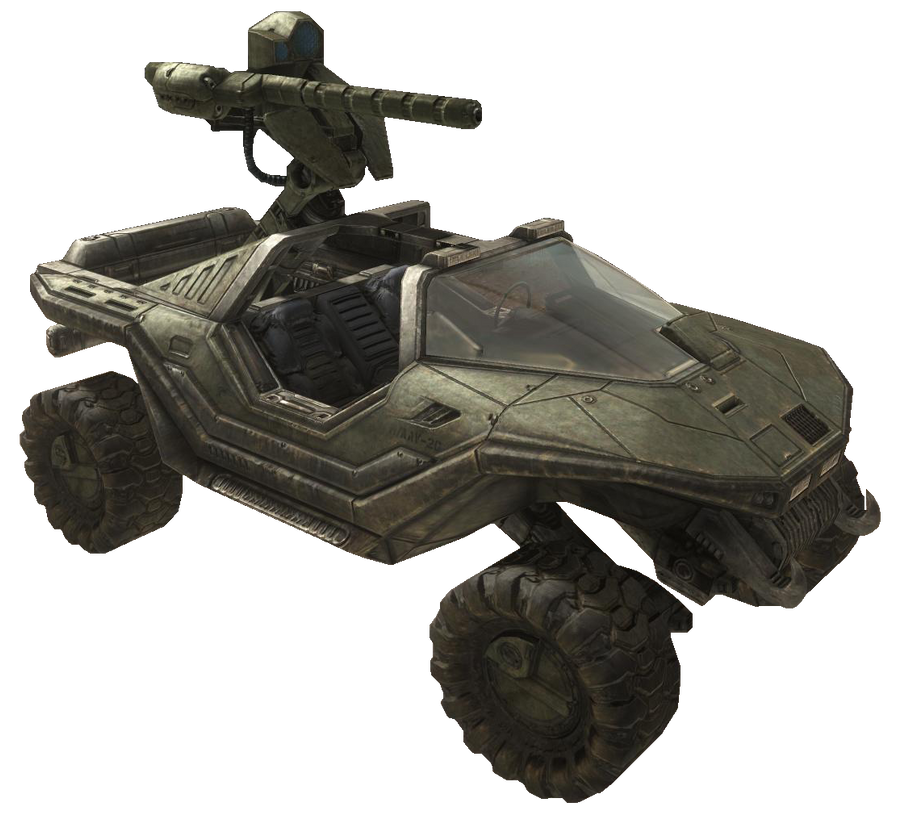
The Gauss Warthog.

This one, I'm going to keep short and sweet. In fact, we'll balance it without actually touching the vehicle.

Halo 2 is the strongest incarnation of the Gauss Warthog we ever saw. It was an instant kill, somewhat rapid fire vehicle turret that ensured the demise of anyone on a level playing field with it. Halo 3 nerfed the rate of fire, but the vehicle dominated even harder than the previous iteration. Halo Reach...well, we never saw it because it was bugged and literally fired through Forge objects. In Halo 4, we saw the Gauss on Exile completely dominate games even when players could spawn with Plasma pistols and Plasma grenades to take it down. It saw longer sprees than the Mantis could ever dream of. Its rate of fire and aim assist were nerfed, but it continued to dominate.

In Halo 2 Anniversary, 343 took a heavy hand to the Gauss and turned its firing mechanism from an instant kill upon trigger pull into a charged up shot much like the Halo 4 Railgun, which made it a bit unwieldy for the user.

Ironically, the strongest iteration of the Gauss Warthog (Halo 2's) was the least dominant. (Unless you directly compare H2A Stonetown versus H2 Zanzibar, in which case Stonetown Gauss is weaker. Over the whole of H2, however, the Gauss was less dominant than a Gauss on Stonetown in H2A can be.)

With the new incarnations of Halo, the developers failed to properly assess what made the Gauss acceptable in Halo 2.

The vehicle existed on maps such as Zanzibar, Headlong, and Terminal in Halo 2. Each of these maps featured either extreme verticality, heavily segmented map design, or both in conjunction with one another. There were plenty of paths along the map that were free from the gun's reign of terror. Its turret's range of motion wasn't steep enough to pick off targets overhead.

The Gauss Warthog saw repeated nerfs in subsequent games because it wasn't viewed contextually, nor was it allowed to be placed on maps that let it take control of low impact areas of the map (low field on Headlong, the fields on Terminal) – it could easily control those areas, but could not reach the portions of the map which were necessary for scoring an objective. (I mean, the Gauss COULD drive there if you were determined, but... not really the best place to be.)

tldr: HEY BIG TEAM BATTLE MAPS WITH VERTICALITY AND SEGMENTATION RATHER THAN LARGE FLAT OPEN FIELDS ARE COOL AND IF YOU UTILIZE THEM THEN THE GAUSS BECOMES OKAY TO BE OVERPOWERED BECAUSE IT CAN DOMINATE UNIMPORTANT SECTIONS OF THE MAP RATHER THAN THE ENTIRE MAP ALL AT ONCE.

Okay, enough about Halo vehicles... lets talk about something from another game...


This is the Flail, from PlanetSide. If you've driven the Wraith in Halo, you have a mild idea of what the Flail is like. But now take that Wraith range (base to base on Blood Gulch maps)...and multiply it by about ten. The Flail could fire from base to base on the expansive PlanetSide continents.

But there's a problem... the Flail pilot can't see anything he's doing. In order to utilize the Flail, you need a second person in your Squad with a weapon called a Laze Pointer. The Flail was never self-sufficient. It wasn't uncommon to see a column of Flails all in the same squad with a single person painting targets to unleash a cataclysm of plasma mortars raining from the sky.

Unfortunately, this is at odds with the PlanetSide 2 design goals which insisted every non-transport vehicle was given some degree of self-sufficiency (all tanks gave control of the main cannon to the pilot, rather than locking the guns away to additional passengers.)

So my favorite PlanetSide vehicle was not allowed to play in the sandbox with its other friends when they made the switch to the new playground.

How can we fix it?

The first option is to include a camera in the shots – each time you fire you're given a fly-by-wire camera to spot where your shots are actually going. (This functionality definitely exists in the game, as it is the NC's Empire Specific Rocket Launcher, the Phoenix's method of operation.) The issue for this idea, of course, is that the travel time of the shot is often longer than the time it takes to recharge shots, so you'd be forcing a player to sacrifice potential damage output / suppression time in order to line up their shot. A second issue is that this doesn't help prevent the trial-and-error shots from ending up landing among your own army and betraying everyone.

An alternate route is to have the vehicle automatically place a personal waypoint where its shots will land – this helps you better understand what you're going to hit and where to aim to get your desired result. While this one doesn't carry the drawbacks of the previous option, it's perhaps a bit TOO user friendly and may make the vehicle too easy to use.

The third route combines the first two: have the vehicle include a deploy option before it may begin firing (which I'm fairly sure the original already had) – once deployed, the vehicle first releases a drone, piloted by the player. This drone may be flown wherever, and then the drone must also be deployed. Once the drone is deployed, a waypoint is placed in order to target the drone (which is immune to Flail fire, but susceptible to being killed by other weaponry.) If killed by other weaponry, the Flail must release another drone in order to continue firing. This keeps the vehicle user-friendly and capable as a fantastic mortar vehicle, but also grants counterplay to those who are under siege from the mortar (an option not present in the original PlanetSide, where all it took was a stealthed player with a laser pointer to declare your base Plasma Crater Number 722A.

And now the Flail is free to exist in the context of PlanetSide 2.

I wanted to cover a vehicle from Unreal Tournament as well, but I couldn't honestly think of one other than the Leviathan that felt like it wasn't well-balanced in the context of the game. And the Leviathan was meant to feel the way it did. (5 player vehicle, of COURSE it's going to be OP).

So instead I'm just going to say: Unreal Tournament's Manta and Scorpion are fucking fantastic examples of how to handle self-sufficient vehicles with trade-offs and noticeable weaknesses.

And with that, I'm wrapping up this trip to Audley's Workshop. Hope you enjoyed!

Monday, August 10, 2015

Competitively, Halo and League of Legends are basically the same game.


Competitively, Halo and League of Legends are basically the same game.

"Okay Audley, you've gone off the fucking deep end. How can a first person shooter with equal starts and a top-down MOBA with 100+ champions be the same game?"

I'm going to start off with extremely generic descriptions, but transition into more complex facets of play that exist in both titles that players may be completely unaware are parallel.

The team is more important than the individual. In both games, it's extremely unlikely one player will single-handedly carry the game. Furthermore, a team of 4/5 players that work together well are more likely to win than a team of 4/5 players that have superior skills, so long as the individual skill gap isn't enough to outweigh the teamwork team's ability to execute at all.

At the start of the game, both games have a generic win condition. Whether it be "Destroy the Nexus" in LoL or whatever the game type in Halo it is you're playing, there is a condition for victory.

On your way to the ultimate victory, there are smaller conditions that must be executed to accrue an advantage to set you up for that victory. In Halo, this is generally related to map control and power weapons. In LoL, it can range from taking towers and Dragons to item powerspikes, to certain level breakpoints that give you a certain skill powerspike.

Depending on your current circumstance, your actual "win condition" may vary wildly. In LoL, some team compositions simply reach a point that they can no longer be fought. Others rely on pressuring advantages early to get a large enough lead to overcome later troughs. Some rely on team fighting, while others rely on avoiding team fighting at all costs. In Halo, your win condition is not always "reach the max score" -- but simply to have a high score than your opponent. Near the end of Oddball games, you may simply try to keep the Oddball in a neutral location to keep the opponents from racking up score while you sit on a lead, rather than try to hold the ball yourself.

Information wins games. Both are imperfect information games, where you know for certain where you are at any given time. LoL gives you a minimap with other areas of revealed vision (allied towers, allied champions, allied wards). Halo gives you icons that show whether your teammate is in combat or not. But neither of these are enough.

You still need to know where your enemies are, whether through warding, pinging or calling out their location. You need to know what weapons or major cooldowns players have available to use, both on your own team and on the enemy team. These bits of information get fed into you through communication in games and empower you to make better decisions on where to go or what sort of plays you can potentially get away with attempting. Aggressive plays while the enemy outnumbers you in an area get punished, but knowing the enemy are concentrated on one side may let you know you can jump out and out-BR the fellow in the rocks (or all-in the enemy top laner and take his tower.)

Each game has lanes, and a blown lane assignment must be compensated elsewhere. Halo's lanes aren't as pronounced as League of Legends, but if you examine the successful competitive maps carefully, there is a general trend of aisles of play with segmented sightlines that force map areas to operate in a nearly linear fashion. On certain maps (Sanc, Pit) if a team takes map control from one “lane”, the best way to offset that is to press your advantage in another lane and “flip” the map to neutralize the bleed caused in one lane. In LoL, you'll often find successful solo queue junglers abandon losing lanes and attempt to snowball lanes that are doing well. Or in competitive LoL, you'll see teams that lose an objective on one side of the map often attempt to mirror the objective on the other side whenever possible.

When you're leading, you want to get further ahead. In LoL, this can mean continuously beating down on your lane opponent, taking objectives, or simply getting wards in the enemy jungle to track his movements so you can continue to execute. It could mean forcing a team fight, or overloading another lane while your opponent tries to catch up in your lane. Snowballs are common and easy to spot in LoL.

In Halo, snowballs come from two things: power weapon control and spawn killing. If you've got a numerical advantage, you push, you take over map control (or grab a power weapon). If you've reached the enemy base, you take their flag (and run it wherever their numbers are going to be weakest once they spawn.) Whenever possible, you kill the people as they respawn to avoid letting them influence whatever play is currently happening. You never drop an empty enemy Sniper in H2A, to keep them from ever seeing their rifle again. You always try to position in a way that will influence enemy spawns in a way that make killing them like fish in a barrel.

Sitting on a lead leads to comeback opportunities. Pressing an advantage leads to frantic decisions, forced mistakes, and steeper advantages.

When you're trailing, it's better to stall out than to try to force plays against the team with the advantage. In LoL, attempting to team fight at Dragon while down a few thousand gold in the mid game can turn into a dire situation of being aced and hemorrhaging towers. You can often offset leads by getting small areas of vision control and making a pick-off to slowly ease the gold lead into your favor, while champions with waveclear keep your towers safe. The longer the game goes on in LoL when you are trailing but avoiding giving up larger advantages, the less that flat gold advantage means as the percent advantage decreases.

In Halo, if your opponents have map control or power weapon control lorded over you, it's often best to play passively until your opponents overextend, and retake map control while you've gotten a numerical advantage. Map and weapon control are fluid, and avoiding hemorrhaging kills will allow your team to either take over new focal points on the map as weapons respawn / hills move or to take over the strong areas of the map to set up to slay your opponents and close the gap.

Team compositions are important. In LoL, it's pretty obvious that you don't want to run a team with 5 Marksmen. Such a composition relies on nearly perfect play to be able to execute a win, and the susceptibility to enemy burst or crowd control can leave you in big trouble. You generally want someone to tank, someone to support, a mage/assassin with damage from spells, and an ADC to deal damage with clicking (and probably double down on the tankiness).

In Halo, it's less obvious, and although many pros deny the existence of roles, time has shown again and again, rosters with a player dedicated to Sniping (ADC!), one generally dedicated to “selfless” plays (support) (flanking, objective-running), one player balls-out aggressive with a dominant BR (tank/bruiser), and another dedicated to controlling certain areas of the map (control mage) tend to have the most consistent high placings. Teams made of players of similar styles often struggle, and teams made of lesser skilled players with a decent composition often out-perform expectations.

Speaking of controlling certain areas of the map, Zoning is an important aspect in both games. In LoL, zoning usually refers to a player with high burst potential or CC / Engage potential standing in a position and using their presence as threat enough to keep a damage dealer from moving forward (or in some cases, like Alistar W, using the ability to keep them from coming near Baron while you finish off your smite.) Zoning can also accrue you advantages in minion kills or experience during the laning phase by keeping the enemy away from the minion wave.

In Halo, zoning is what makes Ogre 2 great. Whether he's controlling an actual power position or a portal on Warlord and watching cross-map sightlines, he's often in a position to keep other players from threatening his team, while staying relatively safe himself. Players also often use grenades to cut off a route or impede an enemy's advance moreso than to actually attempt damage. In H2A's King of the Hill on Warlord, controlling the base counter-clockwise from the hill often meant the best sightlines to assault the hill, while also great amounts of safety from the players spawning directly opposite of the hill's base – able to force those players into a less optimal path in order to advance for the objective.

Both games also emphasize Spacing quite heavily. Again, Spacing is something more prominent / known in LoL than in Halo. It generally refers to the distance between you/your teammates compared to the distance between you/your enemies. This mostly comes into play during laning phase and team fights. In bot lane, you usually don't want to attempt to trade when you are in range of both enemy laners – you want to trade while you+your ally are in range of the enemy ADC, but not in range of the support. This ensures you have more damage potential on a single target than you would with improper spacing. Qiao Gu demonstrate the power of teamfight spacing with the synergy between their mid laner and ADC, who are almost always in position to focus the same target in a teamfight.

In Halo, you'll find the more successful teams often talk to each other on positioning, and communicate whether they have another's help or not. Less successful teams focus on enemy positioning entirely, and don't focus on whether or not they have the ability to cover each other's sightlines. This also ties back into the aforementioned “lanes” of Halo – you can see OpTic Maniac often shift to the opposite side of Shrine off spawn to cover an uncovered lane while also guaranteeing he has additional angles on players his teammates may be fighting. Coach Towey of Evil Geniuses does a great job coordinating EG's ability to cover one another and ensure they are spaced well.

In both titles, if you were to make a sort of imaginary venn diagram of your potential damage / engage ranges over the course of an entire game, you'd likely find the most successful teams have the highest concentrated / most occurrences of overlap whenever they're in combat.

Mobility is survivability.

This aspect of both games is both accepted and entirely overlooked simultaneously. Sure, people acknowledge Flash is almost 100% must-take on most champions in LoL. They acknowledge that the amount of champions with dashes or hastes in their kits has been gradually increasing over time. Halo players acknowledge Sprint gets used defensively more often than offensively. And that often, attempting to chase is more dangerous than attempting to flee. But what they don't seem to acknowledge is the amount of damage you can avoid simply by being mobile.

Dodging engages in LoL with a blink, staying just-out-of-range of those melees through the Captain's aura from your Janna as you flee toward her with 18% increased movespeed...every missed skillshot or second you stay out of range simply by moving, you've given yourself additional survivability that can't be directly quantified. Is 20 movespeed worth more than 200 health? If it gets you out of the way of that Morgana binding, it absolutely is. If it helps keep you 50 extra range out of the way of Annie's ultimate as she activates Talisman and starts booking it straight for you, it is.

In the upcoming Halo 5, the Thruster Pack and Sprint combine to add so much additional survivability (even with the cost of delaying your shield respawn, it gives more than it takes). Grenades lose relevance as player mobility increases (limiting them almost solely to zoning potential or spot-checking). Close range combat becomes a battle of who can out-maneuver the other, with several areas of low ledges offering potential to parkour your way out of there with a combination of clamber and thrusters. Hell, even being able to get from one location to another more quickly can mean you snagging the power weapon before your opponent, or getting clear of a line of sight before an opponent has a chance to set up a shot with their sniping pick-off tool. Projectile weapons like the Plasma Caster are not much different than a LoL skillshot, and with the leaps granted by the Thruster, this means your best tool to survive isn't whether or not you have shields, but whether or not you can dance.


I truly believe that, at their core, almost all of these aspects of gameplay can be applied to any competitive title (and actually, to any team sport in existence) – LoL and Halo are just the two I have the most experience with and can generate the most examples of overlap from.

While I don't feel I am THAT mechanically skilled at either game (I honestly can't aim for shit in Halo), I take an analytical, measured approach to playing both and focus on playing smart over playing well. I am currently Diamond 4 in League of Legends and have coached a few pro and amateur Halo teams. I also never lose a matchmaking game of Warlord King, by applying the LoL concept of Zoning to every game I play.

Thinking about games in terms of overlapping concepts can help you improve your individual and team-based play and help you see a marked improvement in your ranking.